
Cavapoo Colors: Every Coat Color & Pattern Explained
Quick answer: Cavapoo colors include apricot, red (ruby), black, chocolate, cream, sable, black and tan, phantom, and the Cavalier patterns blenheim (chestnut and white) and tricolor. Many coats lighten with age because of the Poodle fading gene. Color is cosmetic, and it does not change health, temperament or shedding.
Few things spark more excitement than a litter of Cavapoo puppies in different shades. This guide to Cavapoo colors explains every common color and pattern, how colors are inherited, why coats fade, what to make of “rare” and merle claims, and how to choose a color without paying a premium for marketing.
How Cavapoo Coat Color Actually Works
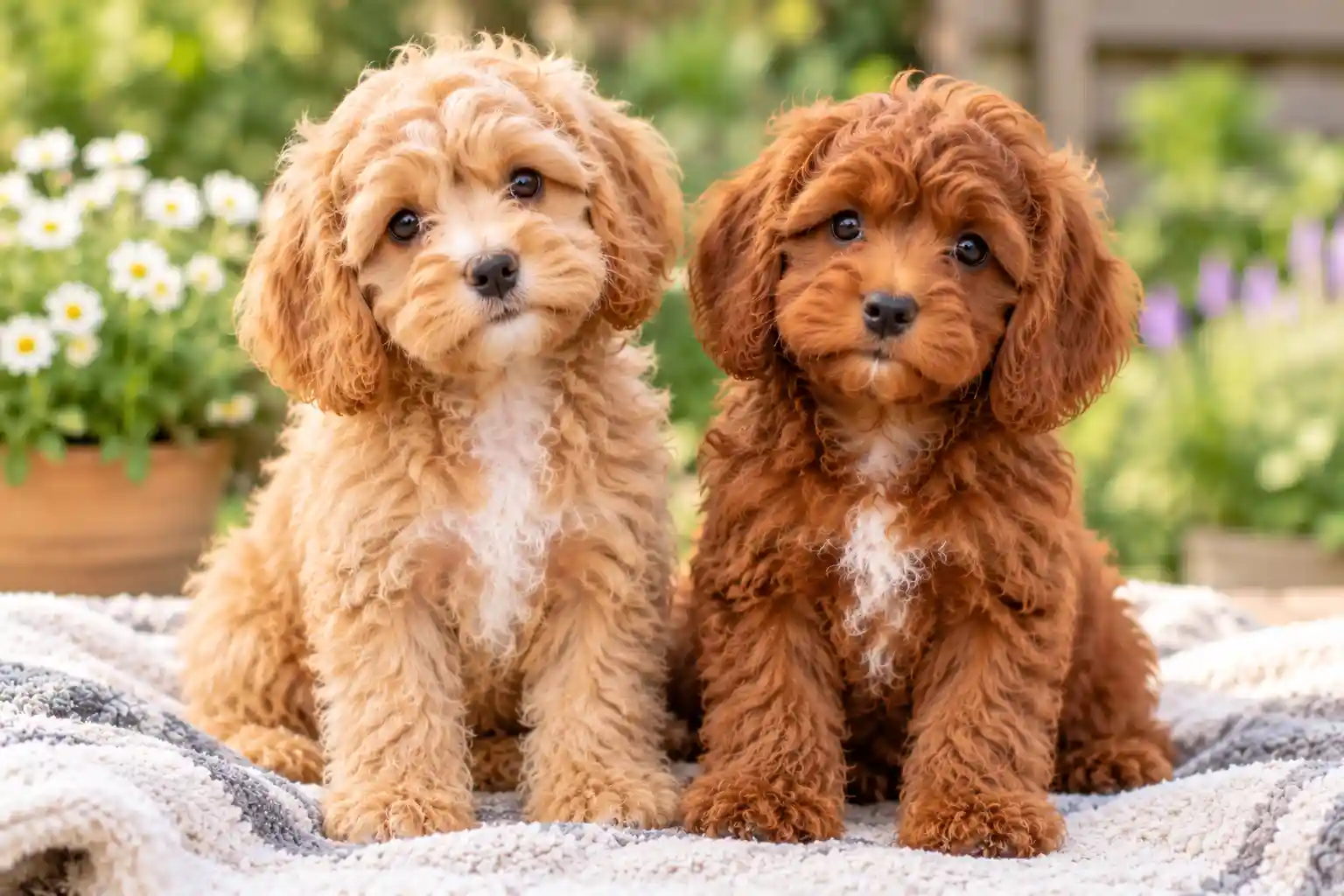
Cavapoo colors come from two sources. The Cavalier King Charles Spaniel offers four recognised colors: blenheim, tricolor, ruby and black and tan. The Poodle offers solid colors such as black, white, cream, apricot, red, brown, silver and blue. A Cavapoo can inherit any combination of these.
Color genes are inherited independently of generation. An F1, F1b or F2 Cavapoo can be any color, as explained in our F1b vs F1 vs F2 guide. Because puppies in one litter can differ widely, even breeders cannot guarantee a specific color.
Solid Cavapoo Colors
| Color | What it looks like | Notes |
|---|---|---|
| Apricot | Soft golden orange, from pale to deep | Very popular; often lightens with age |
| Red or ruby | Rich reddish-brown | Reflects the Cavalier ruby; can fade to apricot |
| Black | Deep black, often with a few white markings | Dominant color; may fade to silver or grey |
| Chocolate or brown | Warm milk-chocolate shade | Less common; may lighten or turn caramel |
| Cream | Pale off-white to light buff | Low contrast; stays fairly stable |
| Silver or grey | Cool grey tones | Usually the result of faded black |
Apricot and red are the most requested colors. The line between a dark apricot and a light red can be blurry and depends on the light, so ask to see photos of both parents. Black Cavapoos are striking, but the coat often fades noticeably in the first two years.
Patterns and Markings: Blenheim, Tricolor, Phantom and More
Patterns add white or tan to a base color and come mostly from the Cavalier parent.
- Blenheim: chestnut-red patches on a white background
- Tricolor: white with black patches and tan markings over the eyes, on the cheeks and on the legs
- Black and tan: a black coat with tan points on the face, chest and legs
- Phantom: a dark base with lighter tan markings in specific spots, similar to black and tan but often more subtle
- Parti or bicolor: a coat with large white areas and a second color such as black, red or apricot
- Sable: a base color with darker tips, often giving a shaded look

Many patterns include white. Some owners love the dramatic contrast, but white areas can show stains more easily and need extra grooming care. Patterns can also shift as the coat matures, so a puppy’s markings do not always predict the adult look.
Why Some Cavapoo Colors Fade with Age
Poodles can carry a progressive graying or “fading” gene. Cavapoos that inherit it often change color as they grow. A black puppy may become silver or grey. Red can lighten to apricot, and chocolate may turn a softer caramel. The change is usually gradual and can continue into adulthood.
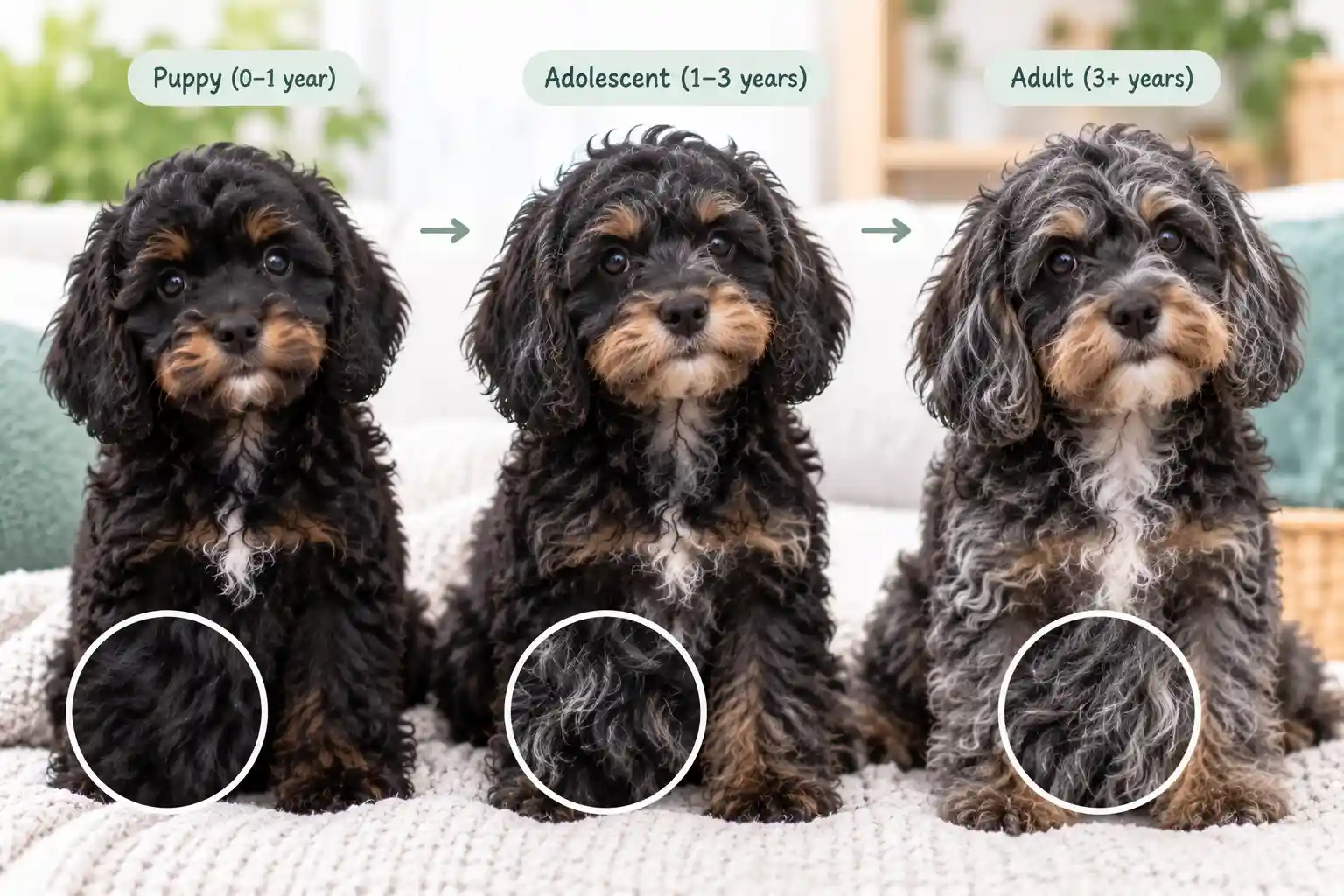
Fading is normal and not a health issue. If a stable color matters to you, ask the breeder whether the parents faded, since parents are the best clue. Cream, apricot and lighter shades change less dramatically than dark ones.
The puppy coat is also replaced at around six months, which can alter both texture and shade (see do Cavapoos shed).
A Note on Merle and “Rare” Cavapoo Colors
Be cautious about colors marketed as “rare” or “exotic”. Merle is the biggest example. Merle is not a recognised color in the Cavalier King Charles Spaniel or the standard Poodle, so a “merle Cavapoo” can indicate undisclosed or mixed parentage.
The merle gene also affects pigment and can be linked to hearing and eye problems, particularly in dogs carrying two copies.
- Ask for photos and registration details of both parents
- Be wary of breeders who charge extra mainly for color
- Never accept color as a substitute for health testing
- Ask whether the parents’ coats faded as they aged
- Walk away if the breeder dodges questions about parentage
Some breeders do charge a premium for red, tricolor or parti coats because of demand, but color should never justify a higher price on its own. Our Cavapoo price guide explains what genuinely drives the cost, and our guide to a reputable Cavapoo breeder shows how to check what you are paying for.
Coat Color, Skin and Grooming
Color does not change shedding or health, but it can change maintenance. Light and white coats show tear stains and dirt more. Darker coats show dandruff and hide dirt. Matting depends on coat texture, not color, so brush every day or two whatever the shade. Our how often to groom a Cavapoo guide and Cavapoo breed guide cover grooming and coat care in detail.
Choosing a Cavapoo Color: What Really Matters
It is fine to have a favorite color, but treat it as the last criterion, not the first. Health testing, the parents’ temperament and a responsible breeder matter far more than shade. Many owners say they fell for the puppy’s personality, not the coat.
| If you want… | Consider |
|---|---|
| A stable, low-change coat | Cream, apricot or a lighter shade |
| Cavalier-style patterns | Blenheim, tricolor or parti |
| A dramatic color change | Black or chocolate, knowing they may fade |
| A classic Cavapoo look | Apricot or red |
| Lower stain visibility | A mid or darker shade |
Cavapoo Colors: The Bottom Line
Cavapoo colors range from soft apricot and rich red to black, cream, blenheim and tricolor. Color is inherited separately from generation, often fades with age and has no link to health or temperament. Treat “rare” claims and merle with scepticism, and choose the puppy and the breeder first.
Color can add to the price, but it is only one factor. See the full cost breakdown.
Read the Price GuideFrequently Asked Questions About Cavapoo Colors
What are the most common Cavapoo colors?
Apricot, red (ruby), black, black and tan, cream and the blenheim (chestnut and white) pattern are among the most common, often with white markings.
What is the rarest Cavapoo color?
Rarity varies by breeder, but solid chocolate, true tricolor with clean markings and unusual pattern combinations are harder to find. Rare does not mean healthier or better.
Do Cavapoo colors change as they grow?
Often, yes. Many puppies lighten as they mature because of the Poodle fading gene. Black can fade to silver or grey, red to apricot and chocolate to a lighter brown.
Are there merle Cavapoos?
Be sceptical. Merle is not a recognised color in the Cavalier or standard Poodle, so a “merle Cavapoo” may signal mixed or undisclosed parentage. Merle genes can also bring health risks.
What is a blenheim Cavapoo?
A coat with rich chestnut-red patches on a white background, inherited from the Cavalier King Charles Spaniel.
What is a tricolor Cavapoo?
A white base with black patches and tan markings above the eyes, on the cheeks, legs and under the tail, also from the Cavalier.
What is a phantom Cavapoo?
A dark coat, usually black or brown, with lighter tan markings in “phantom” spots such as above the eyes, on the muzzle and on the legs.
Does color affect temperament, health or shedding?
No reliable evidence says so. Colors are cosmetic. Shedding follows coat type and genetics, and health follows parent health testing.
Do rare colors cost more?
Often. Some breeders charge a premium for red, tricolor or parti coats, but color should never replace health testing. See our Cavapoo price guide.
Sources and Further Reading
- Doodle Doods, Cavapoo colors and coat patterns (Cavalier and Poodle colors, red and apricot)
- Hepper, Cockapoo colors (merle reasoning for spaniel-poodle crosses)
- OodleLife, Types of Cockapoo colors (fading gene)
This guide is general information and not a substitute for advice from a vet or experienced breeder. Colors vary by individual dog.

Written by Rachel DoyleFounder of The Cavapoo Guide and owner of Winnie and Ziggy. About Rachel →
This article is part of our Complete Cavapoo Breed Guide →

4 Comments