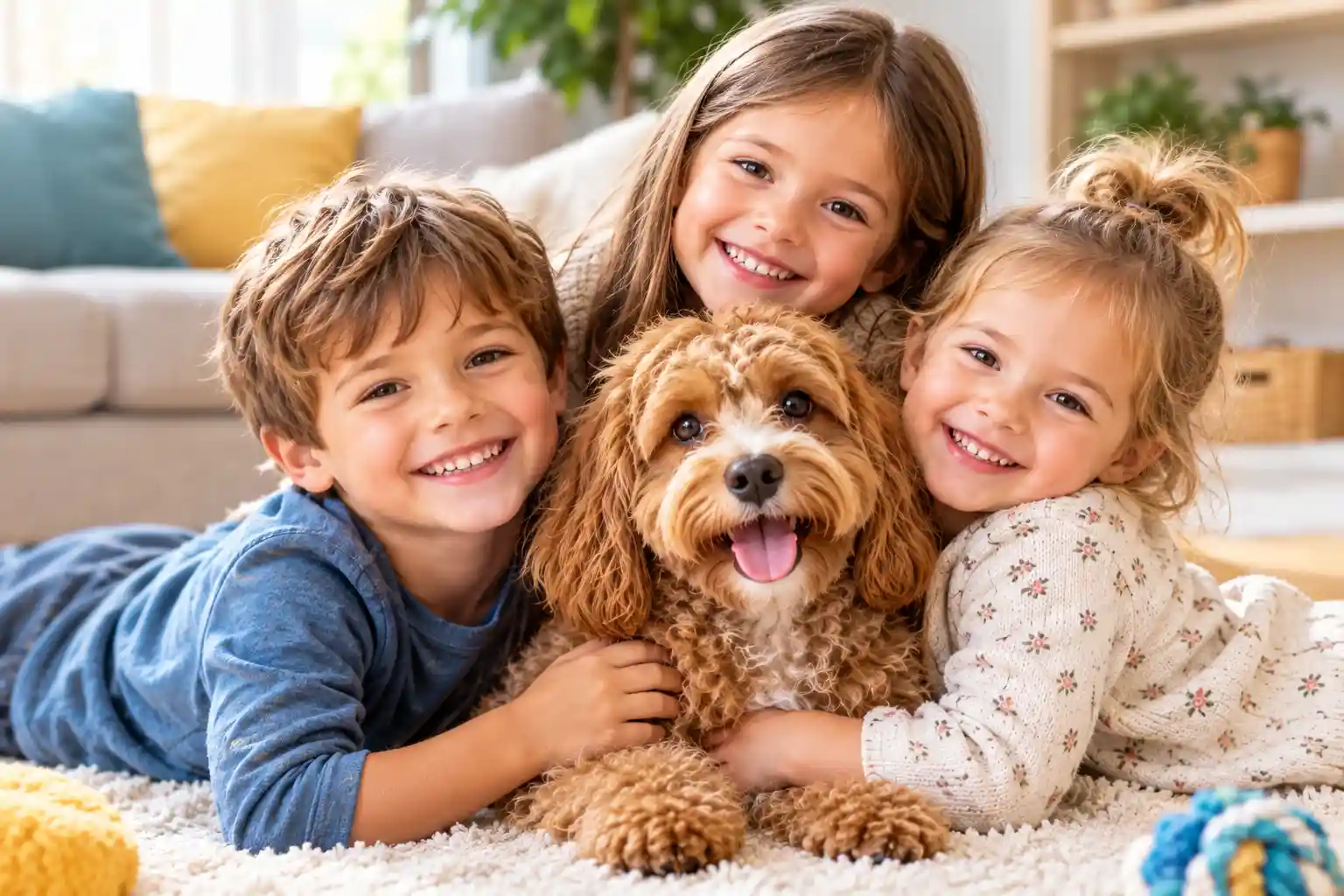
Are Cavapoos Good with Kids? The Complete 2026 Safety Guide
Quick answer: Are Cavapoos good with kids? Yes, in most homes. Both parent breeds were developed as companions, so Cavapoos are typically friendly, affectionate and tolerant. The main risk is not aggression but size: a Cavapoo weighing 7 to 25 pounds can be hurt by a toddler’s squeezing, and any frightened dog can bite. Supervise young children closely, teach gentle handling, and choose a puppy from health-tested, well-socialised parents.
Key takeaways
- Temperament is usually family-friendly; size and individual personality decide the details.
- Never leave a baby or toddler alone with any dog, including a calm Cavapoo.
- Cavapoos are people-oriented and prone to separation anxiety, which matters when the family is out all day.
- Most Cavapoos live well with cats and other dogs when introductions are gradual.
- Cavalier King Charles Spaniel health problems can pass to Cavapoos, so ask breeders for parent health records.
- Cavapoo temperament
- Size and why it matters
- Cavapoos by child age
- Introducing a baby
- Bite risk, honestly
- Dog body language
- Kids’ rules for dogs
- Cats, dogs and small pets
- Puppy or adult?
- Separation anxiety
- Allergies
- Health to know about
- Cavapoo vs similar breeds
- Is a Cavapoo right for you?
- When a Cavapoo is not a fit
- FAQ
What Is the Cavapoo Temperament Like?
A Cavapoo is a cross between a Cavalier King Charles Spaniel and a Poodle, usually a Toy or Miniature Poodle. The Cavalier contributes a soft, affectionate, people-loving nature built over generations as a lap and companion dog. The Poodle contributes intelligence, trainability and a low-shedding coat.
Together they tend to produce a dog that wants to be near its family, enjoys play without being frantic, and rarely shows the territorial or guarding behaviour seen in some breeds.
That is why so many families ask whether Cavapoos are good with kids, and why the honest answer is mostly positive. Still, a Cavapoo is a crossbreed, not a standardised breed. Puppies in one litter can lean toward the Cavalier side (calmer, more clingy) or the Poodle side (sharper, more energetic, sometimes more sensitive).
Meeting the parents, and asking the breeder how they behave around children, is the best preview you can get. Our Cavapoo temperament guide explains the personality behind it.
Generations: F1, F1b and F2
An F1 Cavapoo is a first-generation cross between a purebred Cavalier and a purebred Poodle. An F2 comes from breeding two Cavapoos together, and an F1b is an F1 bred back to a Poodle. Later generations can vary more in size, coat and temperament, so a family with young children benefits from asking for the parents’ size, behaviour and health history rather than assuming a puppy will match a label.
Cavapoo Size and Why It Matters Around Children
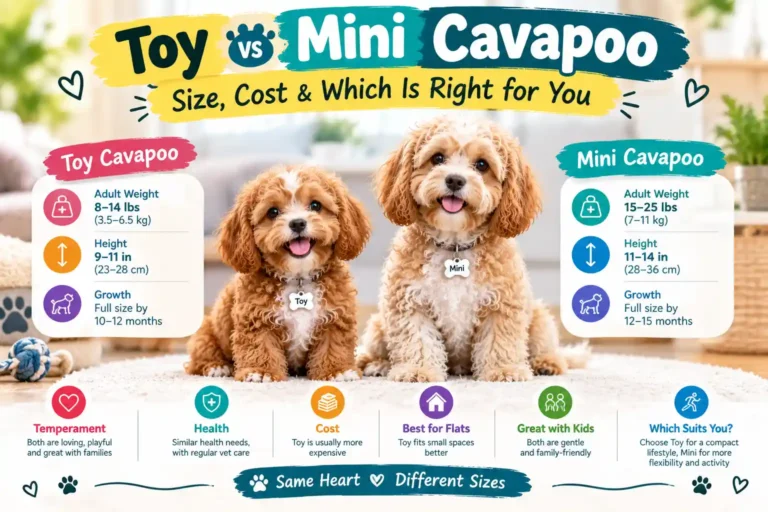
Size is the single most important practical fact about Cavapoos and kids. Estimates vary by source and by the Poodle type used, but they commonly fall into three bands (our Toy vs Mini Cavapoo guide has the detail).
| Type | Typical adult weight | What it means for families |
|---|---|---|
| Toy Cavapoo | About 7 to 13 lb | Most fragile; best with calm older children and strict supervision for young ones |
| Miniature Cavapoo | About 13 to 20 lb | Most common; sturdy enough for family life but still easily hurt by rough handling |
| Larger Miniature cross | About 20 to 25 lb | Sturdier and slightly more robust with active children |
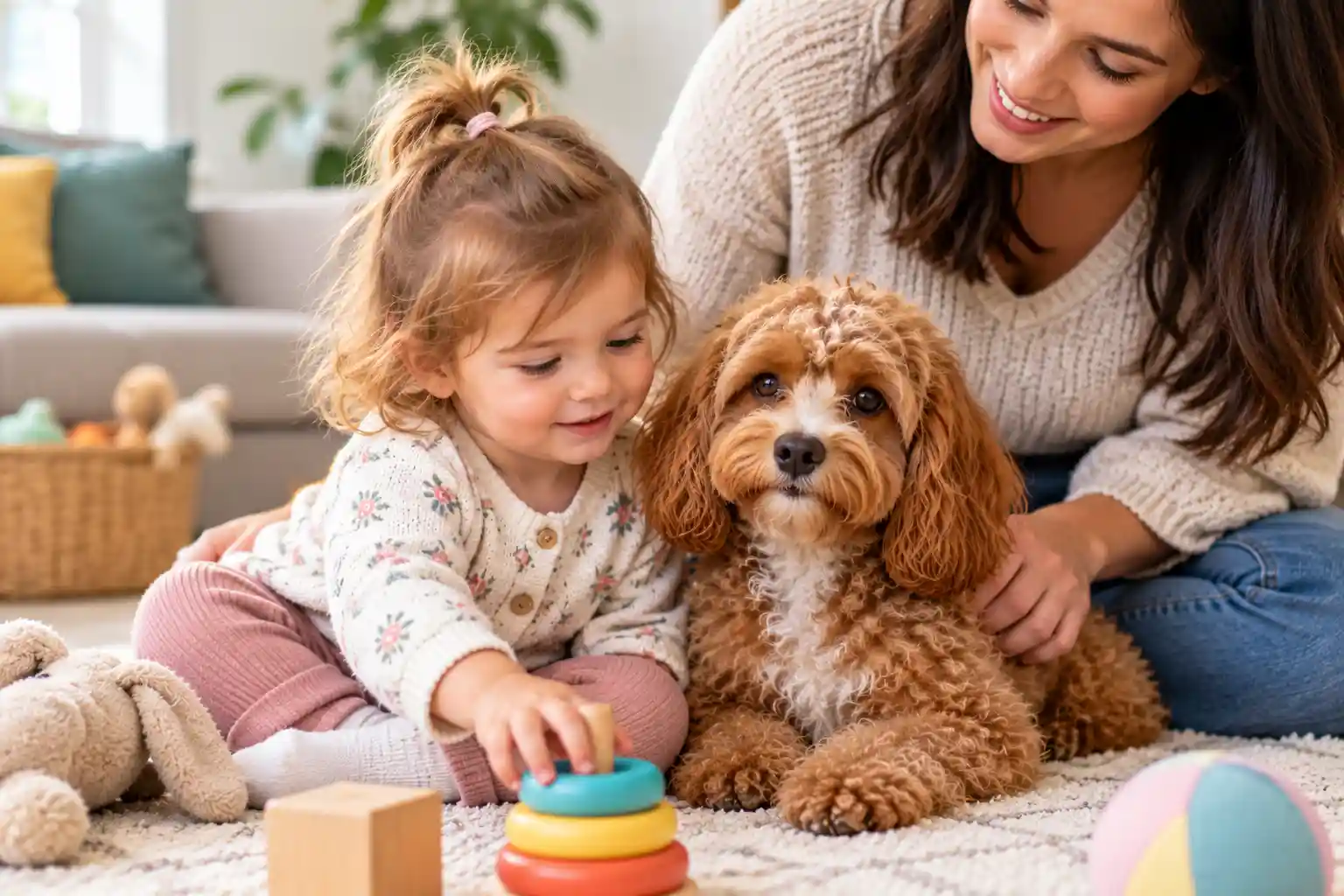
A toddler’s idea of affection includes hugging tightly, grabbing fur, lying on the dog and chasing. For a dog under 15 pounds, those behaviours can cause real injury. They can also push a normally gentle dog past its tolerance. This is a supervision issue, not a personality flaw.
Are Cavapoos Good with Kids of Every Age?
There is no magic age at which supervision stops. Maturity, impulse control and the dog’s own track record matter more than a birthday. Use the table as a starting point, not a guarantee.
| Child age | Realistic expectations | Rules that work |
|---|---|---|
| Newborn to 12 months | Baby and dog can coexist, but contact needs full adult attention | No unsupervised time; use gates, pens and a dog-free sleep space |
| Toddlers (1 to 3) | Highest-risk stage for both child and dog; toddlers cannot read dog signals | Active, within-arm’s-reach supervision; separate spaces when you cannot watch |
| Young children (4 to 8) | Can learn simple rules and help with feeding or play | Supervise; practise “gentle hands”, calm voices, and leaving a resting dog alone |
| Older children (9 to 12) | Can walk, groom and train with guidance | Reduce oversight gradually, never remove it for rough play or visiting friends |
| Teens | Often the dog’s best co-trainer | Assign real chores; still teach them to spot stress |
Hepper, a popular pet resource, describes Cavapoos as especially suited to families with older children, and that matches what trainers see. Cavapoos good with kids of all ages are possible, but only when the adults do the supervising for the youngest.
Cavapoos and Babies: How to Introduce a Newborn
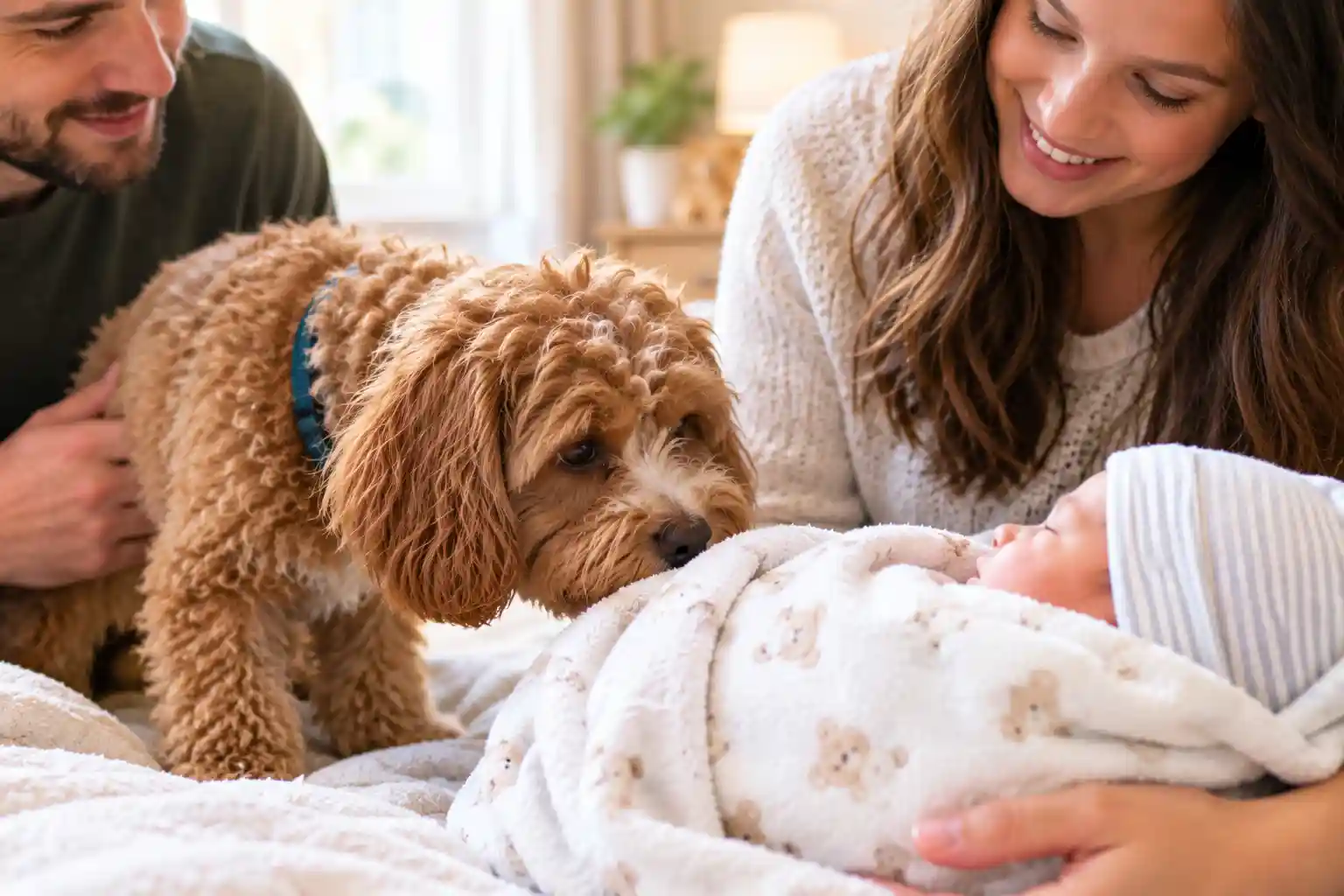
Many Cavapoos adapt well to a new baby, but they are creatures of routine, and a newborn changes everything: new smells, new sounds, less attention. Preparation starts before the baby comes home.
Before the birth
- Practise basic cues: sit, stay, “leave it”, “drop it”, and settling on a mat.
- Change the dog’s routine gradually, such as feeding times, walkers and sleeping spots, so the dog does not link the changes to the baby.
- Play recordings of baby noises at low volume and reward calm behaviour.
- Set up the safe spaces you will use: a crate, an exercise pen or a gated room.
Bringing the baby home
- Send a worn blanket or baby clothing home first so the dog learns the scent. The RSPCA recommends rewarding calm interest in the baby’s scent before a face-to-face meeting.
- Let the dog greet the parent alone first and burn off excitement.
- Keep the first meeting short, calm and leashed or behind a barrier, with a second adult watching the dog.
- Reward calm behaviour, and end the session if the dog seems stressed or overexcited.
- Give the dog a lick mat or puzzle feeder during baby feeding times so the baby means good things.
Safety rule
RSPCA guidance is clear that a baby and a dog should never be left together unsupervised. Also keep small dog toys away from babies (choking risk) and nappies and baby items away from dogs.
Dog Bites and Children: The Honest Picture
Pages that promise a perfectly safe dog are not telling the whole story. Any dog of any breed can bite if it is frightened, in pain, guarding something or pushed too far. Cavapoos have a gentle reputation, and their small size means serious injuries are less likely than with a large dog.
But a bite from a small dog can still cause stress, wounds and an unhealthy relationship, so prevention matters.
The general statistics below apply to all dogs, not to Cavapoos specifically:
- CDC research summarised in an MMWR report found that most dog bites to people under 18 involve a family dog or a neighbour’s dog, not a stray. The figures are old, so check the original before quoting them.
- A study of everyday child-dog interactions notes that in young children bites mostly happen at home, are often to the face, head or neck, and usually involve a familiar dog.
- A University of Colorado study of facial bites in a children’s hospital found that most patients were five or younger, with the highest incidence at age three, and that familiarity with the dog is no guarantee of safety.
The takeaway is practical: the dog you trust is the dog most likely to be involved, simply because it is the one your child is closest to. Close supervision, not breed reputation, is what lowers risk.
Do Cavapoo puppies nip?
Yes. Mouthing and nipping are normal puppy behaviour, and Cavapoo puppies are no exception. Sharp puppy teeth on small hands hurt, which can frighten children and encourage squealing and running, which in turn excites the puppy. Redirect nipping to chew toys, end play calmly when teeth touch skin, and teach children to stand still and quiet rather than flap or shriek.
Reading Dog Body Language: What Every Family Should Know
Dogs almost always warn before they bite, and children rarely notice. Teach your family to spot these early signs of stress, and to give the dog space the moment they appear.
- Lip licking and yawning when nothing is making the dog hungry or tired.
- Whale eye: the whites of the eyes show as the dog turns its head away but keeps looking.
- Turning away, walking off or hiding under furniture.
- Stiffening, freezing or a hard stare.
- Tucked tail, flattened ears or a lowered body.
- Growling, curled lip or snapping. Never punish a growl; it is a warning, and punishing it can teach a dog to skip the warning.
A wagging tail does not always mean happiness. Watch the whole body: loose, wiggly and relaxed is friendly; stiff, still or tense is not.
Dog Safety Rules for Children
Teach these rules early, repeat them often, and model them yourself.
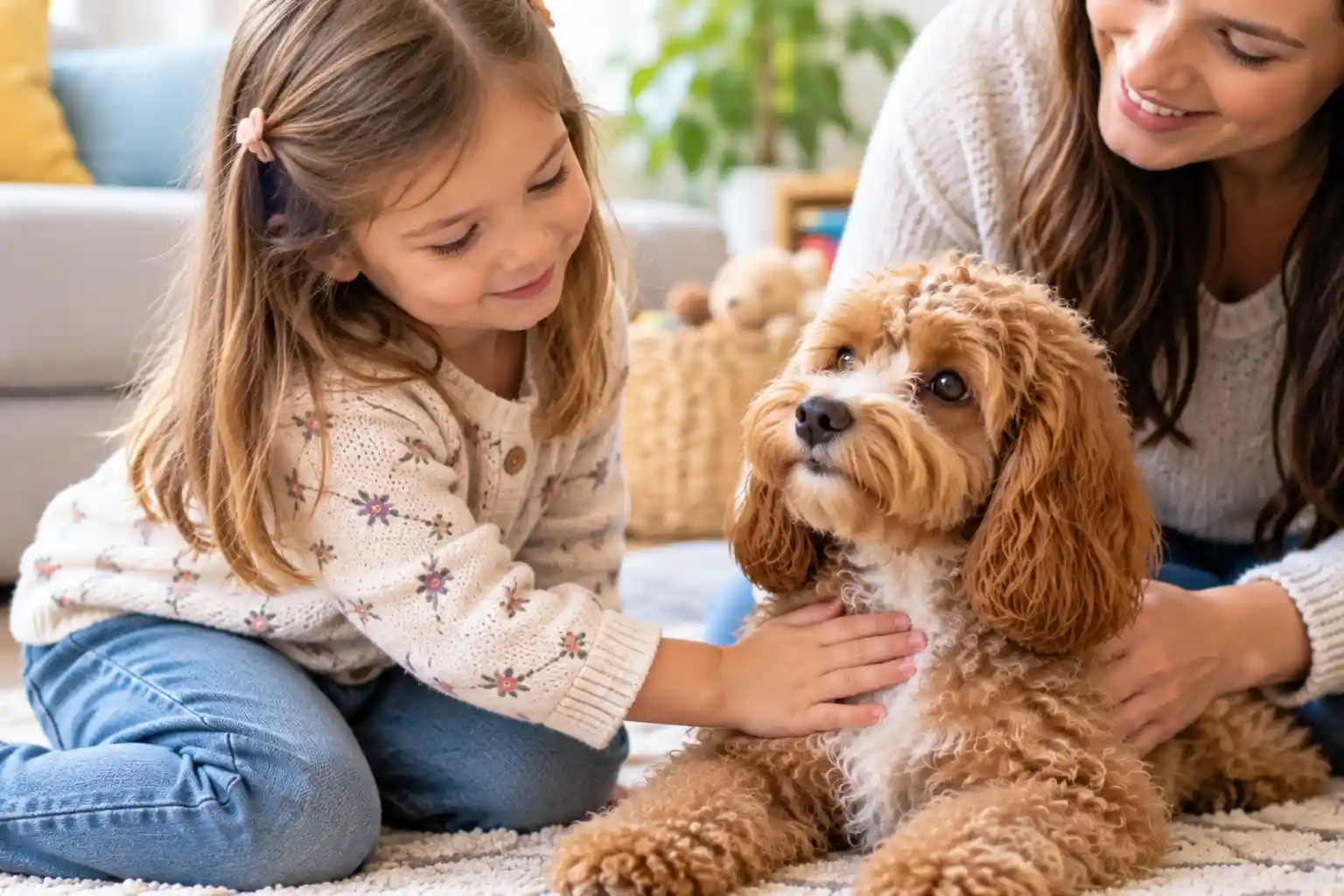
- Pet gently with an open hand, on the chest or shoulder rather than the head or face.
- Never hug, squeeze, climb on or lie on the dog.
- Leave the dog alone when it is eating, chewing, sleeping or in its bed or crate.
- Never take a toy or food away from the dog; ask an adult.
- Do not chase the dog or corner it.
- Stand still like a tree if a dog is too excited, and call an adult.
- Always ask an adult before touching an unfamiliar dog.
Give the dog its own retreat, such as a crate, pen or quiet room, and make that space strictly off limits to children.
Cavapoos and Other Pets
Cavapoos and cats
Cavapoos generally adapt well to cats because neither parent breed has strong prey drive. A gradual introduction works best: separate spaces at first, scent swapping with a blanket, then short supervised meetings with the dog on a leash and the cat free to leave.
Reward calm behaviour from both animals. The cat’s personality matters as much as the dog’s; a confident, dog-experienced cat will usually adjust faster than a shy one.

Cavapoos and other dogs
Most Cavapoos enjoy company and suit multi-dog homes. Meet on neutral ground, match energy levels, and watch play with much larger or rougher dogs, which can injure a small Cavapoo accidentally. Feed and give toys separately at first to prevent guarding.
Cavapoos and small pets
Rabbits, guinea pigs, hamsters and birds are another matter. A Cavapoo’s prey drive is usually mild, but individual dogs vary, and excited chasing can scare or injure small animals. Keep them in secure housing that the dog cannot reach, and never rely on temperament alone.
Puppy, Adult or Rescue: Which Suits a Family?
Puppies are cute but demanding: nipping, toilet training, broken sleep and a constant need for supervision, all while managing children. A calm adult Cavapoo, 2 years or older, with a known history around kids can be easier for a family with young children, because its personality is already visible.
Rescue Cavapoos can be wonderful, but trainers recommend a detailed history and a trial period, especially around babies and toddlers. Whichever you choose, ask directly about the dog’s behaviour around children, food and toys.
Separation Anxiety and Family Schedules
Cavapoos are often called “velcro dogs”. Their people-focused nature is a big part of the charm, but it also makes them prone to separation anxiety. Petful lists it as the biggest downside of the breed. Signs include barking or howling, destructive chewing, house-soiling, pacing and drooling when left alone.
That matters for family planning. If everyone is out at school and work all day, a Cavapoo may struggle. Our full separation anxiety guide has a step-by-step plan, and these basics help:
- Teach short, calm absences from puppyhood and build up gradually.
- Exercise and feed the dog before you leave, and leave a lick mat or puzzle toy.
- Keep arrivals and departures low-key.
- Use a dog walker, daycare or a family member for long days.
- Speak to a vet or certified trainer early if distress appears.
Are Cavapoos Good for Children with Allergies?
Cavapoos often shed little, which is why many people call them “hypoallergenic”. That word is misleading. Dog allergens are found in dander, saliva and urine, not just hair, so no dog is truly allergen-free, and Cavapoos vary individually.
If a child has allergies or asthma, spend several hours with the specific dog, ideally over several visits, and talk to your child’s doctor before committing. Our guide on whether a Cavapoo is hypoallergenic explains the science behind the label.
Cavapoo Health: What Families Should Know
Health affects family life through vet bills, energy levels and, sadly, lifespan. The Cavalier King Charles Spaniel is prone to heart disease (mitral valve disease) and a neurological condition called syringomyelia, and Cavapoos can inherit these risks. Cavaliers can also have eye problems and kneecap issues. A Poodle parent may add its own concerns, such as eye or joint conditions.
Percentages quoted online vary widely, so rely on veterinary and breed-club sources. To protect your family:
- Ask breeders for health-test results for both parents, including heart and eye checks, and follow recommended breed-club screening.
- Be wary of breeders who guarantee “no health problems”.
- Budget for routine vet care and consider pet insurance early, before conditions develop.
- Ask your vet about signs of discomfort, such as persistent scratching at the neck or shoulder, which can be linked to neurological problems in Cavalier lines.
Cavapoos usually live around 12 to 15 years, although that depends on the individual dog. A child who grows up with one will probably be a teenager before it grows old, so this is a long commitment. See our Cavapoo lifespan guide for what to expect at each age.
Cavapoo vs Other Family Dogs
| Breed | Size | Energy | With kids | Notes for families |
|---|---|---|---|---|
| Cavapoo | Small | Moderate | Gentle, patient | Prone to separation anxiety; fragile for toddlers |
| Cockapoo | Small to medium | Moderate to high | Friendly, bouncy | More energy; needs more exercise and mental work |
| Cavalier King Charles Spaniel | Small | Low to moderate | Very gentle | Heart and neurological health concerns; sheds more |
| Labradoodle | Medium to large | High | Friendly, exuberant | Sturdier, but can knock over small children |
| Maltipoo | Very small | Low to moderate | Better with older kids | Very delicate; can be vocal |
If your children are very young or energetic, the Cavapoo’s moderate energy and gentle disposition are real advantages over bouncier crosses. If your children are older and active, a sturdier dog may keep up better.
Is a Cavapoo Right for Your Family? A Checklist
A Cavapoo is likely a good fit if you can say yes to most of these:
- An adult can actively supervise the dog whenever young children are around.
- Someone is home, or able to arrange company, for most of the day.
- You are willing to teach children gentle handling and enforce the rules.
- You can budget for grooming, vet care and training.
- You are ready for 12 to 15 years of commitment.
- You can source a puppy from a breeder who shares parent health and temperament records.
When a Cavapoo May Not Be the Right Dog
An honest guide includes the downsides. A Cavapoo may not suit you if:
- The house is empty for long hours every day.
- Your toddler cannot yet be kept away from the dog, and you cannot supervise.
- You want a guaranteed low-maintenance, allergy-proof or healthy-for-life dog. Those guarantees do not exist.
- You want a guard or very active running companion.
It also helps to remember that coat care is ongoing: Cavapoo coats tangle and mat without regular brushing and professional grooming.
See how their temperament stacks up against the Cockapoo’s slightly higher energy.
Read Cavapoo vs CockapooFrequently Asked Questions About Cavapoos and Kids
Are Cavapoos good with kids?
Usually, yes. Cavapoos are typically gentle, sociable and patient, but their small size means young children need close supervision and gentle-handling lessons.
Are Cavapoos good with toddlers?
They can be, with active adult supervision. A toddler’s grabbing and squeezing can hurt a small dog, and a stressed dog may snap, so never leave toddlers and dogs alone together.
Are Cavapoos good with babies and newborns?
Many adapt well if prepared in advance. Introduce the baby’s scent first, keep early meetings short and calm, and never leave a baby and dog together unsupervised.
Do Cavapoos bite or nip children?
Cavapoos are not an aggressive breed, but puppies mouth and nip, and any dog may bite if frightened or hurt. Training, supervision and reading body language lower the risk.
Do Cavapoos get along with cats?
Most do, especially with a gradual introduction using separate spaces first. The cat’s confidence matters as much as the dog’s temperament.
Can Cavapoos live with other dogs?
Yes, most are sociable and do well in multi-dog homes. Match energy levels, meet on neutral ground, and supervise play with much larger dogs.
What is the best age for a child to live with a Cavapoo?
There is no single safe age. Children from about 5 or 6 can learn dog-safety rules, but supervision should relax gradually based on the child’s maturity and the dog’s track record.
Are Cavapoos hypoallergenic for children with allergies?
No dog is truly hypoallergenic. Many Cavapoos shed little, which can help some families, but spend time with the specific dog and talk to your doctor first.
Can a Cavapoo be left alone while the kids are at school?
Only for short, gradually trained periods. Cavapoos are people-oriented and prone to separation anxiety, so plan for company, enrichment and a dog walker if needed.
Should I supervise my Cavapoo around small children?
Yes. Supervision protects both the child and the dog, whatever the dog’s temperament.
Final Verdict: Are Cavapoos Good with Kids?
So, are Cavapoos good with kids? For most families, yes. They are among the friendliest small crossbreeds, affectionate, adaptable and usually happy to share a home with children, cats and other dogs. The deciding factors are size, supervision, early training and the dog’s individual personality.
Teach your children gentle handling, give your dog a safe retreat, never leave small children alone with any dog, and choose a health-tested puppy from a reputable Cavapoo breeder. Do that, and a Cavapoo can be a wonderful family dog for a long time.
Next, see how they compare in Cavapoo vs Cockapoo, or read our guides on separation anxiety, breeder health tests and potty training.
Sources and Further Reading
- CDC, Nonfatal Dog Bite-Related Injuries Treated in Hospital Emergency Departments (MMWR)
- PMC, Everyday child-dog interactions and parents’ attitudes to supervision
- RSPCA Australia, Will my newborn baby be safe around my dog?
- AVMA, Dog bite prevention
- Petful, Cavapoo temperament
This guide is general information and not a substitute for advice from your vet, doctor or a certified trainer who can assess your own dog and family. Reviewed by Jordan Reyes, CPDT-KA.

Written by Rachel DoyleFounder of The Cavapoo Guide and owner of Winnie and Ziggy. About Rachel →

Reviewed by Jordan Reyes, CPDT-KACertified dog trainer, positive-reinforcement only. About Jordan →
This article is part of our Complete Cavapoo Breed Guide →
One Comment