
Cavapoo Separation Anxiety: Signs, Causes & How to Fix It
Quick answer: Cavapoo separation anxiety is a panic response to being left alone, usually starting within minutes of you leaving. Signs include nonstop barking or howling, pacing, drooling, destruction near doors and toileting indoors. It is not spite or boredom. The gold-standard fix is gradual desensitisation (leaving for seconds, then building up), with exercise, enrichment and, for some dogs, vet-prescribed medication.
If your Cavapoo cries, paces or wrecks the house when you leave, you are not alone. This guide to Cavapoo separation anxiety explains why the breed is so prone to it, how to tell true anxiety from boredom, how long a Cavapoo can safely be left, and a step-by-step plan to build real confidence. It also covers when to call a vet or behaviourist.
What Is Cavapoo Separation Anxiety?
Separation anxiety is severe emotional distress when a dog is separated from the people it is attached to. Behaviourists describe it as closer to a panic attack than naughtiness. A dog in that state is in fight-or-flight, so it cannot learn, eat or settle until it feels safe again.
A Maryland SPCA resource estimates that about one in five dogs show signs of separation anxiety when left alone, and notes that it is a leading reason dogs are given up. That is why Cavapoo separation anxiety deserves early attention rather than waiting for it to fade. Mild protest in a new puppy is normal, but panic that escalates is not.
Why Are Cavapoos Prone to Separation Anxiety?
The Cavapoo is a Cavalier King Charles Spaniel and Poodle cross. Both parents were bred for companionship, and the Cavalier in particular has a long history as a lap dog that wants to be near its person. Poodles add intelligence and sensitivity, so a Cavapoo notices every change in routine and feels it strongly. Our Cavapoo temperament guide covers the wider personality.
Research and clinic data suggest several risk factors for any dog, and they apply here too:
- Strong single attachment: one vet clinic notes pets with one owner were about 2.5 times as likely to show signs as pets in larger households
- Sudden changes: a house move, a new work schedule, a loss in the family or time in a kennel can trigger it
- Early life: dogs from shelters or with a history of abandonment are more at risk
- Age: senior dogs can develop new anxiety, sometimes linked to cognitive decline
- Lack of early practice: puppies that are never left alone, even briefly, may not learn that you come back
Genetics and temperament play a part, but you can shape the outcome. Teaching short, calm absences from the first week gives a Cavapoo a huge head start.
Signs of Cavapoo Separation Anxiety
Cavapoo separation anxiety usually shows very quickly. A Tufts behaviourist reports that most show the first signs within 10 minutes of the owner leaving, with an average of just over three minutes.

- Barking, howling or whining that does not stop
- Pacing, circling or frantic attempts to escape
- Drooling, heavy panting, dilated pupils or trembling
- Scratching or chewing at doors, windows and crates
- Toileting indoors even though the dog is house-trained
- Refusing food or treats when you leave
- Following you from room to room and panicking when a door closes
- Ecstatic, frantic greetings when you return
Not every dog shows every sign. Some are silent and shut down instead, so watch for subtle signs such as lip licking, yawning or staring at the door before you even leave.
Cavapoo Separation Anxiety vs Boredom vs Other Causes
Boredom and anxiety look similar from the outside, which is why dogs get misjudged as “naughty”. The timing and body language tell them apart.
| Cause | Timing | Typical signs | What helps |
|---|---|---|---|
| Separation anxiety | Starts within minutes of leaving, often escalates | Panic: pacing, drooling, frantic exit-focused destruction, refusing food | Gradual desensitisation, vet or behaviourist support |
| Boredom | Builds slowly, often later | Chewing, digging, raiding bins; calm body language | More exercise, puzzle toys, training |
| Normal puppy protest | Brief fuss that settles in minutes | Short whining, then sleep | Short practice absences, routine |
| Medical or ageing | Any time, often new in an adult or senior | Toileting accidents, restlessness, night waking | Vet check, including pain and cognitive issues |
| Noise phobia | Triggered by storms, fireworks or traffic | Shaking, hiding, drooling when you are home too | Desensitisation to the sound, vet advice |
Video is the best test. A pet camera shows when the distress starts, what the dog does and whether it settles. Vets also use video to track progress and separate anxiety from boredom or illness.
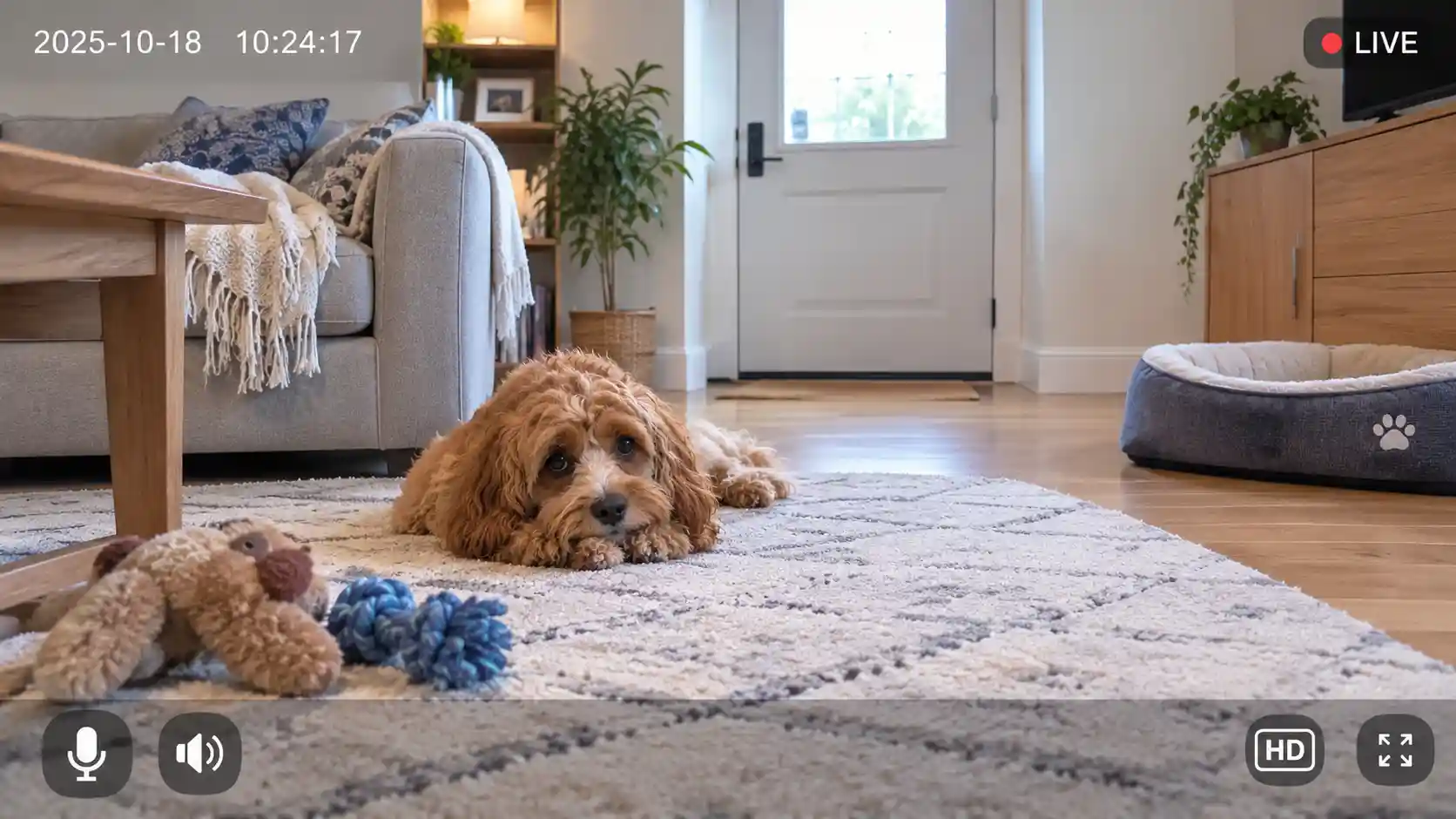
If anything changes suddenly, especially in an older dog, book a vet check first to rule out pain, incontinence and cognitive decline. Our Cavapoo lifespan guide explains how age-related changes show up.
How Long Can a Cavapoo Be Left Alone?
There is no single safe number, and opinions differ. Use these figures as upper limits for a healthy, trained dog, not targets.
| Dog | Guide to maximum time alone | Notes |
|---|---|---|
| Young puppy (8 to 12 weeks) | About 1 to 2 hours | AKC rule of thumb: roughly one hour per month of age |
| Puppy 3 to 6 months | 3 to 6 hours at most | Bladder limit as well as anxiety; build up slowly |
| Healthy adult Cavapoo | A few hours; breed guides suggest up to about 6 | Needs gradual training first; not all-day |
| Cavapoo with separation anxiety | Seconds to minutes at first | Only stay below the point of panic until trained |
| Senior Cavapoo | Varies, often shorter | Needs frequent toilet breaks and comfort checks |
Breed guides warn that Cavapoos do not cope with long, regular isolation, and that even well-trained dogs find a full day alone distressing. If everyone is out for 8 to 10 hours, plan a dog walker, daycare, a neighbour or a family member for midday. Smaller Toy Cavapoos have tiny bladders and need even more frequent breaks, as explained in our Toy vs Mini Cavapoo guide. Our Cavapoo breed guide explains whether the breed fits your schedule.
Step-by-Step Training Plan to Treat Cavapoo Separation Anxiety
Systematic desensitisation is the gold standard. The golden rule is to stay below the dog’s panic threshold: practise absences short enough that your Cavapoo stays calm, then build up gradually. If the dog panics, you went too fast, so drop back.
- Get a vet check. Rule out pain, illness and other causes, and discuss whether medication could help
- Find the baseline. Film your dog and note exactly how long they stay calm when you leave, even if it is two seconds
- Create a safe space. Choose a pen, safe room or bed in a calm area, with a mat, comfortable bedding and a chew
- Teach a settle cue. Reward your dog for lying on the mat while you move around the room, and build to leaving the room
- Desensitise departure cues. Pick up keys, put on shoes and sit down again, so these signals stop predicting panic
- Practise micro-absences. Step out for a second, return calmly, reward quietly, then build slowly to 5, 10, 30 seconds and minutes
- Vary the pattern. Mix short and longer absences at different times so the dog does not predict escalation, but never jump up too fast
- Keep arrivals calm. Wait until your dog is relaxed before greeting, and avoid big emotional goodbyes
| Stage | Typical absence | Move on when… |
|---|---|---|
| 1 | Seconds, inside the room | Calm for several repeats |
| 2 | Out of sight for 5 to 30 seconds | Relaxed on camera |
| 3 | 1 to 5 minutes | No pacing or drooling |
| 4 | 10 to 30 minutes | Settles or sleeps |
| 5 | 1 to 2 hours | Reliably calm |
| 6 | Real-life routines | Maintain with regular practice |
Progress is rarely a straight line. Expect weeks to months, with good days and setbacks. Keep a log, and restart one step back after a rough day. For severe cases, work with a professional.
Managing Cavapoo Separation Anxiety Day to Day
Training only works if the dog is not repeatedly pushed into panic between sessions. During the programme, avoid leaving your dog alone beyond its current threshold.
- Arrange cover: a dog walker, daycare, family, friend or working from home for the first weeks
- Exercise before you go: a walk and sniffing session tire the body and mind
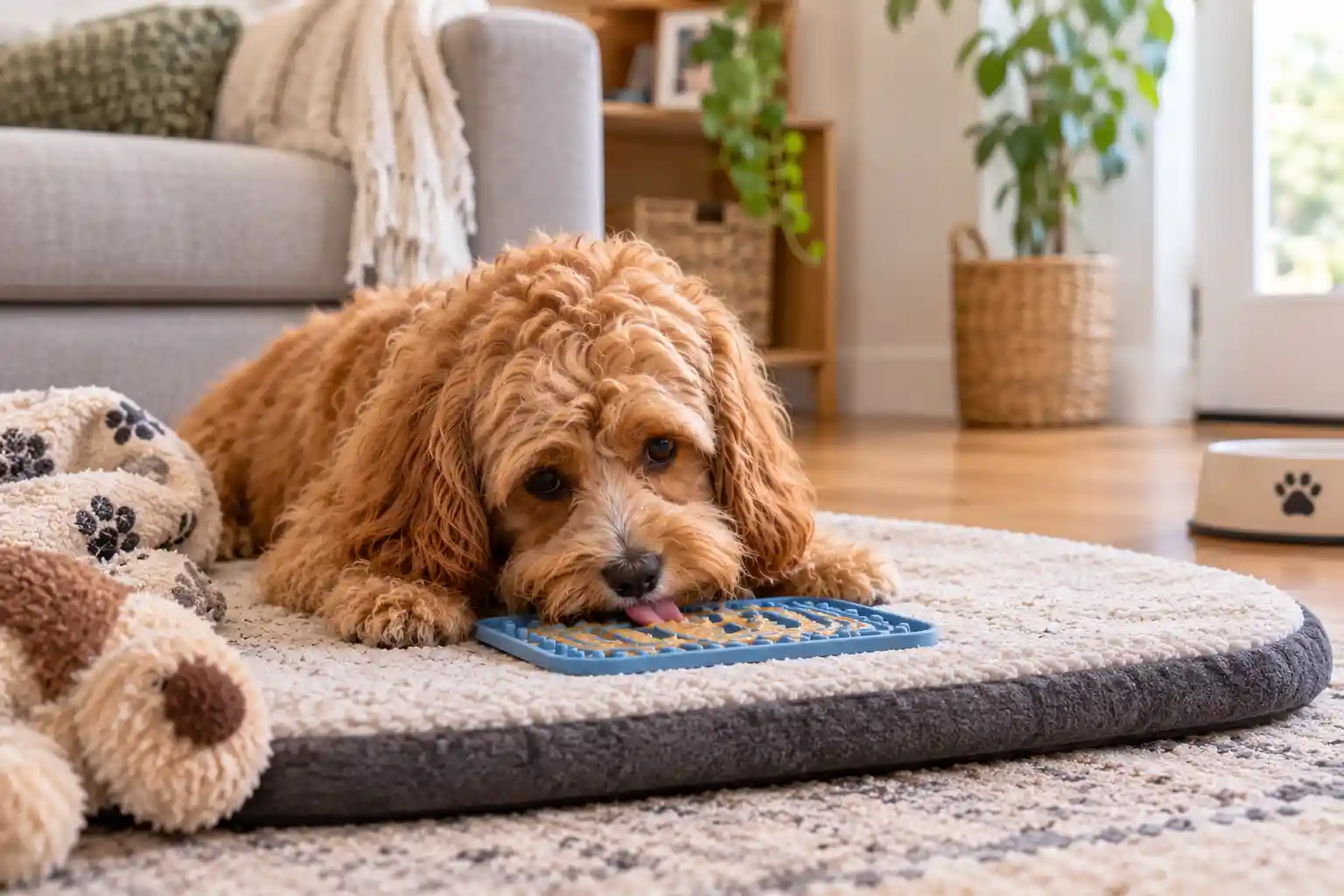
- Offer enrichment: a lick mat, snuffle mat or stuffed chew (a stuffable toy such as a KONG works well), though a panicking dog may refuse food, which is itself a clue
- Keep the routine predictable: regular meals, walks and quiet time
- Add background sound such as soft radio or white noise if your dog likes it
- Keep a diary of each practice session and note what the camera shows
Use our Cavapoo puppy first week guide and puppy checklist to set up a calm space and routine from day one. If you have children, make sure the dog’s retreat is off limits, as covered in our Cavapoos and kids guide.
Crates, Calming Products and Medication
Crates and pens
A crate is a cosy den for many Cavapoos, but for a dog with separation anxiety it can cause confinement panic. Test with a camera. If the dog panics more inside, switch to a pen or small safe room. Never lock an anxious dog in a crate and walk away to “teach it”.
Calming products
Pheromone diffusers, calming chews, music and anxiety wraps are popular and can take the edge off for some dogs, but the evidence is mixed and none replaces training. Treat them as extras, and ask your vet before using supplements.
Medication
For moderate to severe cases, vets may prescribe medication alongside training. Clomipramine and fluoxetine are the drugs approved for canine separation anxiety in the US, and they work by lowering baseline anxiety so the dog can learn. Medication is an aid, not a cure, and only a vet can prescribe it. Never give human medicines.
Do not punish an anxious dog
Scolding a dog for noise, chewing or accidents makes the fear worse, because the dog is panicking, not misbehaving. Clean up calmly and focus on the training plan.
Mistakes That Make Cavapoo Separation Anxiety Worse
- Leaving the dog until it “gets used to it”: repeated panic strengthens the fear, a method sometimes called flooding
- Making goodbyes and hellos dramatic: it signals that your departure is a big deal
- Getting a second dog as a cure: dogs in multi-dog homes develop separation anxiety at about the same rate
- Going too fast: doubling the time because the dog “seemed fine” can undo weeks of work
- Assuming it is boredom: extra toys alone will not fix panic
- Skipping professional help: severe, escalating or self-injuring cases need expert support
When Cavapoo Separation Anxiety Needs Professional Help
Ask your vet for advice if distress is severe, your dog injures itself, the problem is escalating, or progress stalls after a few weeks. Your vet can rule out medical causes and discuss medication. A veterinary behaviourist handles complex cases, and a certified trainer such as a CPDT-KA or a certified separation anxiety trainer can lead the desensitisation plan.
Preventing Cavapoo Separation Anxiety in a New Puppy
Prevention is much easier than cure. Start in the first week.
- Leave the room for seconds from day one and return calmly
- Practise short crate or pen time while you are home
- Give a lick mat or chew during practice absences
- Keep departures boring and avoid long hugs or apologies
- Build toilet routines early, see our Cavapoo potty training guide
- Ask the breeder about early socialisation and alone-time practice, see our reputable Cavapoo breeder guide and the health tests to ask a Cavapoo breeder
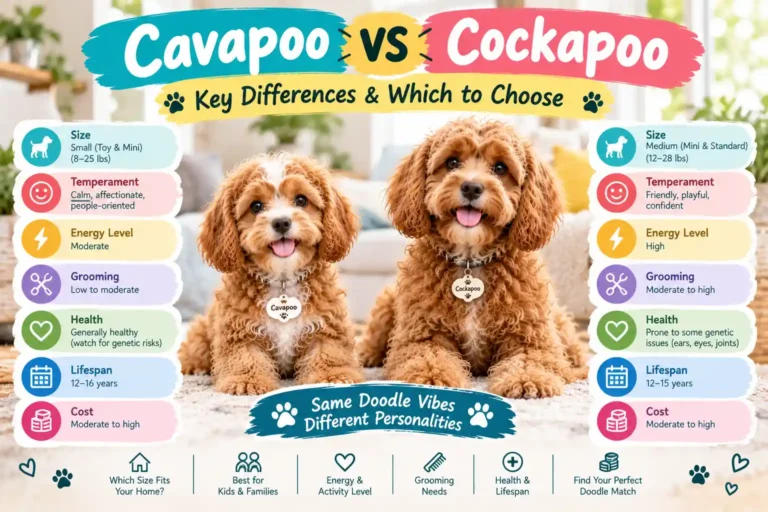
Cavapoos are not the only doodle with this trait. Our Cavapoo vs Cockapoo comparison shows how another popular spaniel-Poodle cross compares for alone-time.
Cavapoo Separation Anxiety: The Bottom Line
Cavapoo separation anxiety is common, real and treatable. The key facts are that it is a panic response, it starts within minutes of leaving, and it improves with gradual training that stays below the dog’s panic threshold. Treat Cavapoo separation anxiety by combining desensitisation with exercise, enrichment and, where needed, veterinary support, and many Cavapoos learn to relax alone.
Want the full picture of the breed’s personality?
Separation anxiety is one part of the Cavapoo temperament. See how affection, energy and trainability fit together.
Read the Temperament GuideFrequently Asked Questions About Cavapoo Separation Anxiety
Are Cavapoos prone to separation anxiety?
Many owners and breed guides report it as the most common behaviour problem. Cavapoos are bred from companion dogs and bond closely, so they find being alone harder than more independent breeds. Not every Cavapoo develops it.
What are the signs of separation anxiety in a Cavapoo?
Panic that starts within minutes of you leaving: nonstop barking or howling, pacing, drooling, panting, scratching at doors, destruction near exits, toileting indoors and refusing food. See the full checklist above.
How long can I leave my Cavapoo alone?
As a guide, puppies about one hour per month of age up to roughly six hours, and adults a few hours at most, but a dog with separation anxiety may only cope with seconds or minutes until trained. Watch the individual dog, not the clock.
Can Cavapoo separation anxiety be cured?
It is usually manageable and often improves a lot with gradual desensitisation, enrichment and sometimes vet-prescribed medication. Progress takes weeks to months and is rarely a straight line.
Will a second dog help my Cavapoo’s separation anxiety?
Usually not. Vets report that dogs living with other dogs develop separation anxiety at about the same rate as single dogs, because the attachment is to the person.
Is a crate good for a Cavapoo with separation anxiety?
It depends. A crate is a safe den for some dogs but can add confinement panic for others. Test with a camera: if the dog panics more in the crate, use a pen or safe room instead.
Do Cavapoos grow out of separation anxiety?
Rarely on their own. Without training it often continues or worsens, and senior dogs can develop new anxiety. Start gradual alone-time training early and seek help if it persists.
Should I give my Cavapoo medication for separation anxiety?
Only if your vet or a veterinary behaviourist recommends it. Medication is an adjunct to training, not a cure, and the vet will choose the drug and dose. Never give human medication.
Can I work full time and own a Cavapoo?
It is possible with planning: gradual alone-time training, a walker or daycare, a family member at lunchtime or flexible home working. A Cavapoo left alone 8 to 10 hours daily with no plan is a poor match. See our breed guide.
Affiliate disclosure: as an Amazon Associate we earn from qualifying purchases at no extra cost to you. We only link products we would recommend to a friend with a Cavapoo.
Sources and Further Reading
- Maryland SPCA, Separation anxiety (prevalence, gold-standard treatment)
- Tufts Your Dog, Solutions for separation anxiety in dogs (onset timing, treatment program)
- Mar Vista Animal Medical Center, Separation anxiety (risk factors, approved medications)
- dvm360, Canine separation anxiety proceedings (diagnosis, desensitisation)
- OodleLife, Can you leave a Cavapoo alone? (breed-specific guidance)
This guide is general information and not a substitute for advice from your vet or a certified behaviourist. Every dog is different.
Written by Rachel DoyleFounder of The Cavapoo Guide and owner of Winnie and Ziggy. About Rachel →

Medically reviewed by Dr. Amanda Ferris, DVMLicensed veterinarian specializing in small companion breed health. About Dr. Amanda Ferris →

Behaviour reviewed by Jordan Reyes, CPDT-KACertified dog trainer, positive-reinforcement only. About Jordan →
This article is part of our Complete Cavapoo Breed Guide →
6 Comments