
Cavapoo Temperament: Personality, Traits & Behaviour
Quick answer: Cavapoo temperament is affectionate, gentle, sociable and eager to please. Cavapoos bond deeply with their people, have moderate energy, are intelligent and sensitive, and usually get along with strangers and other pets. Their main weakness is dependence: many struggle when left alone, so early alone-time training matters.
Personality is the reason most people fall for this crossbreed. This guide to Cavapoo temperament breaks down the traits you will see every day, why individual dogs differ, how the Cavalier and Poodle sides shape behaviour, and how to bring out the best in your dog from puppyhood onward.
Cavapoo Temperament at a Glance
The Cavapoo temperament is a blend of two companion-bred parents. The Cavalier King Charles Spaniel contributes warmth, gentleness and a love of laps. The Poodle contributes intelligence, alertness and a sharp, sensitive mind. Together they usually produce a loving, bright, people-focused dog.
| Trait | Typical Cavapoo | Notes |
|---|---|---|
| Affection | Very high | Strongest trait; wants to be near people |
| Energy | Moderate | Walks and play, not marathon running |
| Friendliness | High | Usually welcomes strangers and other dogs |
| Intelligence | High | Learns quickly; can get bored |
| Trainability | High | Eager to please but sensitive |
| Independence | Low | Prone to separation anxiety |
| Barking | Low to moderate | Alert and excited barking more than constant noise |
| Guarding instinct | Low | A greeter, not a guard |
This is the typical profile, not a guarantee. A Cavapoo is a crossbreed, so individual dogs vary, which we explore below. For the wider picture of size, coat and care, see our Cavapoo breed guide.
Affection and Attachment: Built to Bond
If one word describes the Cavapoo temperament, it is affectionate. Cavaliers were bred for centuries as lap companions, and that heritage shows. Most Cavapoos follow their owners from room to room, lean against legs and settle at their feet, which is why owners call them “velcro dogs”.
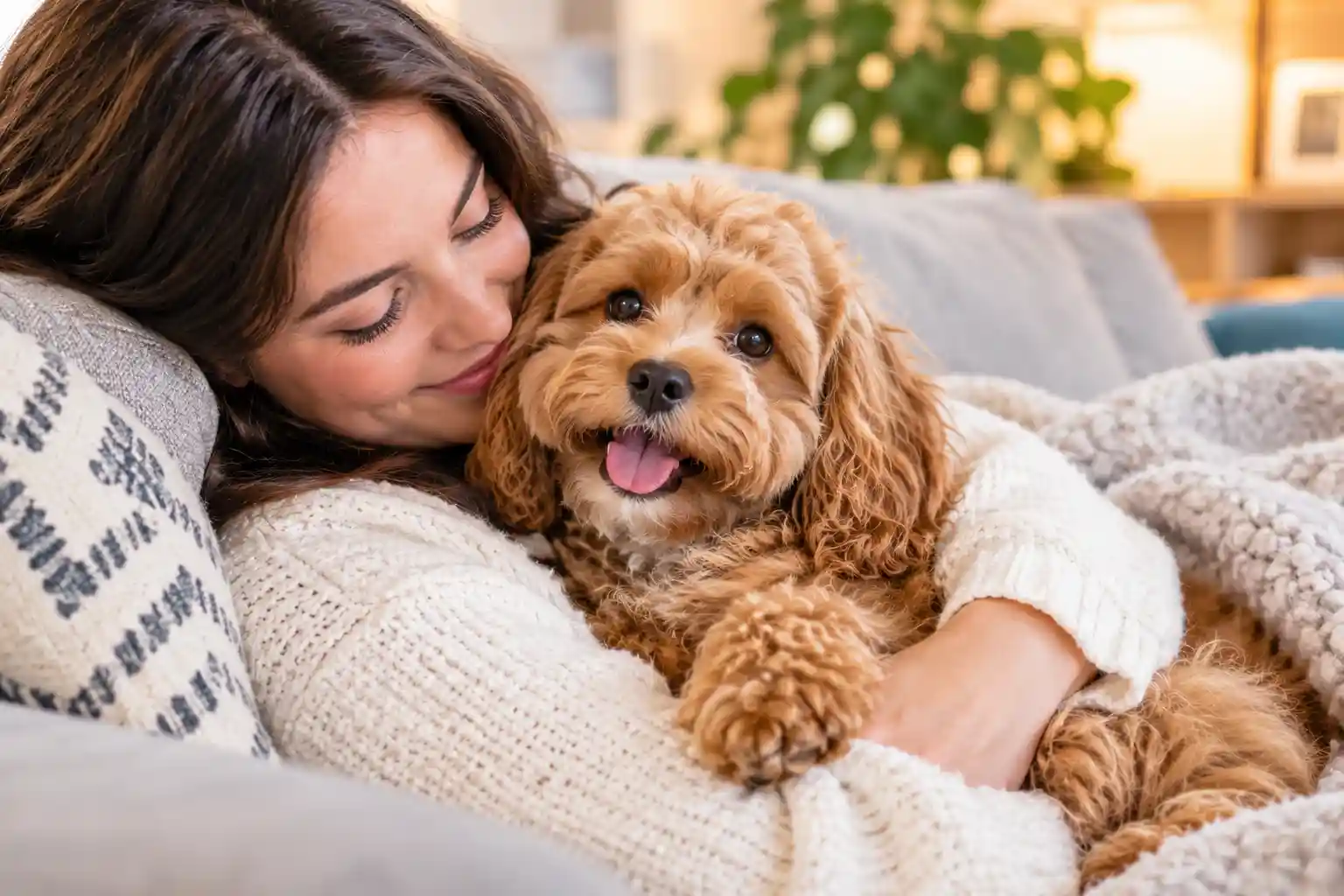
That closeness is a big part of the appeal, but it has consequences. A Cavapoo that is left out of family life can become anxious, noisy or destructive. This breed is happiest in a home where someone is around much of the day, or where a plan for company exists.
Energy Level and Playfulness
Cavapoo energy sits in the moderate range. Most enjoy 30 to 60 minutes of activity a day and are equally content to spend the evening on the sofa. They love fetch, tug and chasing toys, and many keep a puppyish playfulness well into adulthood.
Energy varies with the parent mix. Dogs leaning toward the Cavalier tend to be calmer and cuddlier, while those with a stronger Poodle influence can be bouncier and more alert. Mental exercise matters as much as physical: sniffing walks, puzzle feeders and short training games tire a Cavapoo out effectively.

Sociability: Friendly by Default
Cavapoos are typically friendly toward strangers, visitors and other dogs. Neither parent breed is known for guarding or suspicion, so most greet newcomers with a wagging tail rather than a warning. That makes them poor guard dogs but excellent social companions.
Good socialisation still counts. Puppies that meet a wide range of people, places, sounds and dogs during their early months grow into more confident adults. Shy or fearful behaviour usually comes from limited exposure, not from the breed itself.
For how this friendliness plays out around children, see our guide on whether Cavapoos are good with kids.
Independence and Separation Anxiety
Independence is where the Cavapoo temperament is weakest. Their attachment means many struggle when left alone, and separation anxiety is the most common behaviour complaint among owners. Signs include whining, barking, pacing, drooling, chewing and toileting indoors when left.
- Start with seconds, not hours: leave the room, return calmly and build up
- Make departures and arrivals low-key rather than emotional
- Exercise and feed before you go, and leave a lick mat or a stuffed KONG
- Provide a safe space such as a crate or pen, introduced gradually
- Use a walker, daycare or family member for long working days
- Seek help early from a vet or certified trainer if distress is severe
Never punish an anxious dog for destruction or noise. The behaviour is driven by panic, and punishment makes it worse. A gradual, patient programme of desensitisation works far better than hoping the dog will “get used to it”. Our full Cavapoo separation anxiety guide sets out the step-by-step plan.
Intelligence, Trainability and Sensitivity
Cavapoos are bright and eager to please, which makes training enjoyable. They pick up cues quickly, enjoy learning tricks and respond beautifully to praise and treats. Some owners find them slightly slower in certain areas, especially house-training, which is down to patience and consistency, not lack of intelligence.
They are also sensitive. Harsh words, raised voices and heavy-handed corrections can upset a Cavapoo and set training back. Keep sessions short, upbeat and reward-based, and end on a success.

Barking and vocalising
Cavapoos are not known as nuisance barkers, but they will announce visitors and bark when excited, bored or lonely. Excessive barking is usually a sign of an unmet need: exercise, attention or company. Teach a “quiet” cue, reward calm behaviour and meet the underlying need.
Nipping and mouthing
Puppies mouth and nip, as all puppies do. Redirect to a toy, pause play when teeth touch skin, and reward gentle behaviour. Consistency from every family member is what makes this phase pass quickly.
How Cavapoo Temperament Changes with Age
A Cavapoo’s personality is not fixed at eight weeks. It develops with age, experience and training.
| Age | What you will see |
|---|---|
| 8 to 16 weeks | Curious, mouthy, quick to bond; prime socialisation window |
| 4 to 12 months | Bouncy, testing boundaries, teething; consistency matters |
| 1 to 2 years | Adolescent energy, occasional selective hearing; keep training |
| 2 to 7 years | Settled, affectionate adult; temperament most stable |
| 8+ years | Calmer, sleeps more, may become more clingy or anxious |
Many Cavapoos stay playful for life, but most mellow noticeably after two. Changes in a senior dog’s behaviour, such as new anxiety or irritability, can signal pain or illness, so mention them to your vet. Our Cavapoo lifespan guide covers ageing in detail.
Why Cavapoo Temperament Varies Between Dogs
Two Cavapoos from the same litter can behave differently, and several factors explain why.
- Parent mix: more Cavalier tends toward calm and cuddly; more Poodle toward alert and bouncy
- Generation: later generations vary more, as covered in our F1 vs F1b vs F2 guide
- Breeder and early life: puppies handled gently and exposed to everyday sights do better
- Socialisation and training: the first few months shape adult confidence
- Health and pain: discomfort can make any dog irritable or withdrawn
- Your routine: an under-exercised, lonely dog develops problem behaviours
Male vs female Cavapoo temperament
Some owners report that males are slightly more outgoing and females a little more attention-seeking, but evidence is anecdotal. Individual personality, early experience and training count for far more than sex, so choose the puppy, not the label.
Is the Cavapoo Temperament Right for You?
The Cavapoo temperament suits people who want a close, loving companion and can offer company, routine and gentle training. It is a poor fit for anyone wanting an independent dog, a guard dog or a high-drive running partner.
- Good fit: you are home often or can arrange company, enjoy cuddles, and like reward-based training
- Good fit: you want a friendly dog for visitors and other pets
- Needs planning: you work long hours away from home
- Poor fit: you want an aloof, independent or protective dog
If you are weighing this against another popular doodle, our Cavapoo vs Cockapoo comparison shows how the Cockapoo’s temperament differs, especially in energy.
Their gentle nature is a plus, but small size means supervision matters. Read the full safety guide.
Read the Kids GuideFrequently Asked Questions About Cavapoo Temperament
What is the Cavapoo temperament like?
Affectionate, gentle, sociable and eager to please. Cavapoos bond closely with their people, have moderate energy, and are usually friendly toward strangers and other pets.
Are Cavapoos calm or hyper?
Mostly in between. They enjoy play and walks but settle readily indoors. Dogs leaning toward the Poodle side can be bouncier and more sensitive.
Do Cavapoos bark a lot?
Not usually excessively, but opinions vary. Most bark to alert or when excited, and barking tends to rise with boredom, loneliness or lack of exercise.
Are Cavapoos smart and easy to train?
Yes, generally. They are intelligent and want to please, but they are sensitive, so reward-based training works far better than harsh corrections.
Do Cavapoos get separation anxiety?
They are prone to it. Their strong attachment means they can struggle when left alone, so teach short, calm absences from puppyhood.
Are male or female Cavapoos better?
Individual personality matters far more than sex. Some owners find males a little more outgoing and females a little more attention-seeking, but this is anecdotal.
Do Cavapoos stay puppy-like?
Many keep a playful, puppyish streak into adulthood, and most mellow noticeably after about two years.
Are Cavapoos aggressive?
Aggression is uncommon in the breed. Fear, pain or poor socialisation can still cause snapping, so early socialisation and reading body language matter.
Do Cavapoos like to cuddle?
Very much. Affection and closeness are the breed’s defining traits, and many are happiest on or beside their owners.
How can I tell what temperament a Cavapoo puppy will have?
Meet both parents, ask the breeder about their behaviour, and observe how the puppy reacts to people, noises and handling. Parents are the best predictor.
Affiliate disclosure: as an Amazon Associate we earn from qualifying purchases at no extra cost to you. We only link products we would recommend to a friend with a Cavapoo.
Sources and Further Reading
- Lemonade, Cavapoo breed overview (personality, barking, separation anxiety)
- Hepper, Cavapoo breed information (temperament, male vs female)
- Waggel, Cavapoo temperament and personality (gentleness, separation anxiety)
This guide is general information and not a substitute for advice from a vet or certified trainer. Behaviour varies between individual dogs.

Written by Rachel DoyleFounder of The Cavapoo Guide and owner of Winnie and Ziggy. About Rachel →
This article is part of our Complete Cavapoo Breed Guide →

8 Comments