Cavapoo Ear Infections: Signs, Causes & Prevention

Quick answer: Cavapoo ear infections are painful inflammation of the outer ear canal, usually shown by head shaking, scratching, a bad smell, redness or discharge. Floppy ears, hair and moisture make them more likely, but allergies are the most common underlying cause, so recurring infections need a vet. Never use cotton swabs, do not pluck ear hair routinely, and have a vet check any ear that is red, smelly, swollen or painful.
If your Cavapoo is shaking their head, scratching an ear or has a musty smell, you may be dealing with Cavapoo ear infections, one of the most common reasons these dogs visit the vet. This guide explains the signs, the real causes (which are not just floppy ears), how to clean ears safely, why routine ear hair plucking is no longer recommended, and when to see a vet. Advice is drawn from the Merck Veterinary Manual, Texas A&M veterinary medicine, veterinary dermatology reviews and dvm360, and it replaces some outdated grooming advice you may have read.
What Are Cavapoo Ear Infections?
Cavapoo ear infections are usually a condition called otitis externa, which is inflammation of the lining of the outer ear canal. The Merck Veterinary Manual calls it the most common disorder of the ear canal in dogs. One or both ears can be affected, and signs can appear suddenly or build up over time. The ear is often itchy or painful, and the infection itself is usually bacteria or yeast taking advantage of an ear that was already inflamed.
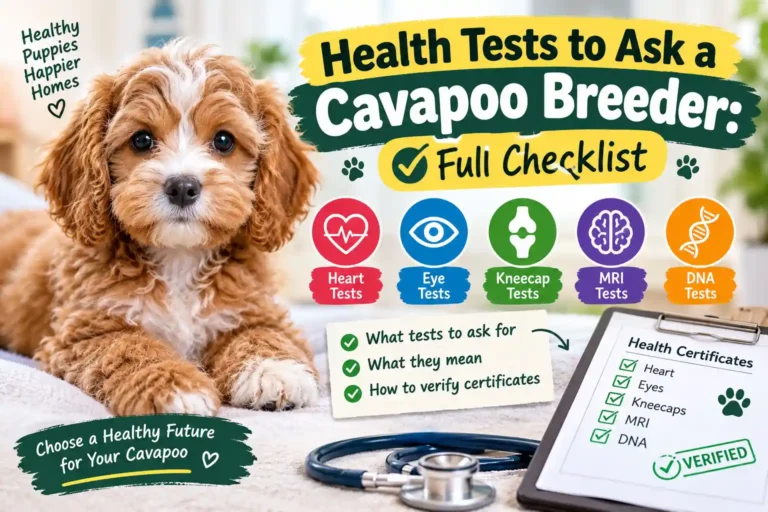
That last point matters. An infection is rarely the whole story: something usually made the ear vulnerable first. The Merck manual warns that unless every cause is treated, the condition often returns. This is why Cavapoo ear infections that keep coming back need more than ear drops. For a wider look at the breed’s health, see our health tests guide and Cavapoo lifespan guide.

Signs and Symptoms of an Ear Infection
| Sign | What you may notice |
|---|---|
| Head shaking or tilting | Frequent shaking, or the head held to one side |
| Scratching or rubbing | Pawing at the ear, rubbing it on the floor or furniture |
| Bad smell | A sour, yeasty or foul odour from the ear |
| Redness or swelling | Red, hot or swollen ear flap or canal opening |
| Discharge | Dark, waxy, yellow or brownish material in or around the ear |
| Scaly or crusty skin | Flaky skin on or around the ear |
| Pain | Yelping, flinching or pulling away when the ear is touched |
| Hearing or balance changes | Less responsive to sounds or unsteady (needs urgent attention) |
The Merck Veterinary Manual lists head shaking, foul odour, redness, swelling, scratching, discharge and scaly skin as the usual signs. A Merck Animal Health owner handout also lists hearing loss and loss of balance. Cavapoo ear infections often start quietly, and because Cavapoo ears are hairy and floppy, a mild problem can hide under the flap, so lift the ear and look and sniff regularly.
What Causes Cavapoo Ear Infections?
Vets use a four-part model to explain ear disease. It shows why simply treating the bacteria or yeast is often not enough.
| Type of factor | What it means | Examples in a Cavapoo |
|---|---|---|
| Primary cause | The trigger that inflames the ear | Allergies (environmental or food), ear mites, a foreign body such as a grass seed, hormonal or immune disease |
| Secondary cause | Infection that takes hold in an inflamed ear | Malassezia yeast and bacteria |
| Predisposing factor | Anatomy or habits that make problems more likely | Floppy ears, narrow canals, hair in the canal, humid weather, swimming, wet ears |
| Perpetuating factor | Changes that keep the disease going | Thickened or narrowed canal lining, middle ear involvement |
Cavapoos inherit a mix of risks. The Cavalier King Charles Spaniel parent has long, heavy, hairy-edged ears, and the Poodle parent can grow hair deep in the canal, both of which are predisposing factors. Rover’s veterinary sources add that a warm, damp, dark canal is an ideal place for yeast and bacteria to grow, especially in dogs with floppy ears. Texas A&M’s Dr. Teller lists mites, foreign bodies, excess hair in the canal, anatomic changes, excess moisture, injury, immune and endocrine disease, and even excessive cleaning as causes that let bacteria and yeast overgrow. Together these factors explain why Cavapoo ear infections are so common in the breed.
Allergies: The Hidden Driver of Recurring Ear Infections
If you see repeated Cavapoo ear infections, think allergies first. Dr. Teller says allergies are the most common cause of ear infections in dogs, and a veterinary dermatology review reports atopic dermatitis as the primary cause in 43% to 75% of dogs with otitis externa. Allergic dogs often show other signs, such as itchy skin, licking or chewing paws, and itchy ears at certain times of year.
- Environmental allergies: pollen, dust and mould can cause seasonal or year-round itching.
- Food reactions: a vet may suggest a supervised food trial, not a random diet change. See our feeding guide.
- Parasites: keep flea and parasite control up to date, because fleas can trigger allergy.
- Related signs: tear staining can also rise with allergies. See our Cavapoo tear stains guide.
Be wary of claims that switching to a particular diet, often a raw or ‘natural’ one, will stop Cavapoo ear infections. Diet is only relevant if a food allergy is the cause, and that needs veterinary diagnosis.
How to Clean a Cavapoo’s Ears Safely
Routine cleaning does not prevent Cavapoo ear infections: healthy ears often need little cleaning, and over-cleaning can cause problems. An IDEXX veterinary lecture from 2025 lists dry over-cleaning with cotton or gauze, wet over-cleaning with water-based cleaners, and irritants such as alcohol and low-pH products among the factors that can lead to infection. Ask your vet whether your dog’s ears need routine cleaning at all.
If your vet advises cleaning, this is the general approach. Ask them to demonstrate it first, because cleaning an infected ear can push material deeper.
- Use a vet-approved ear cleaner made for dogs, as recommended by your vet.
- Lift the ear flap and fill the canal with the cleaner, following the label.
- Massage the base of the ear gently for about half a minute to loosen debris.
- Let your dog shake its head so debris comes out of the canal.
- Wipe only the visible part of the ear with cotton or gauze, never deep inside.
- Reward your dog so ear care stays a calm routine.
Do not clean an ear that is red, swollen, painful or discharging. Book a vet visit instead.

What Not to Put in a Cavapoo’s Ears
| Avoid | Why |
|---|---|
| Cotton swabs in the canal | Merck and Texas A&M say never use them; they push debris deeper and can injure the canal |
| Alcohol and harsh or very acidic products | IDEXX lists alcohol and low-pH products as canal irritants that can lead to infection |
| Hydrogen peroxide or vinegar | Vets do not recommend them for dog ears; they can irritate inflamed skin |
| Leftover medicine from a past infection | Yeast, bacteria and mites need different treatment, and a vet should check the ear first |
| Allowing another dog to lick the ears | Texas A&M advises against it |
Merck’s advice is simple: do not use anything that pushes debris deeper into the canal. If you are unsure what is wrong, a vet can take a sample of discharge with a swab and look at it under a microscope to see whether bacteria, yeast or parasites are present.
Should You Pluck a Cavapoo’s Ear Hair?
Not as a routine way to prevent Cavapoo ear infections. For years groomers pulled hair from the ear canals of Poodles and doodles, and some competitors still recommend it. Current veterinary advice has moved on. A dvm360 review says excessive hair can be a predisposing factor, but plucking can cause inflammation in the canal and make bacterial or yeast overgrowth more likely, and it concludes routine plucking is not recommended because hair alone does not cause infection. A Merck Animal Health owner handout makes the same point: avoid plucking if the hair is not causing a problem.
- Healthy ears with little hair: leave the hair alone and keep the ears clean and dry.
- Lots of hair at the entrance: trimming the visible hair is gentler than pulling it out.
- Hair blocking the canal or a history of infections: ask your vet, who may recommend removal case by case.
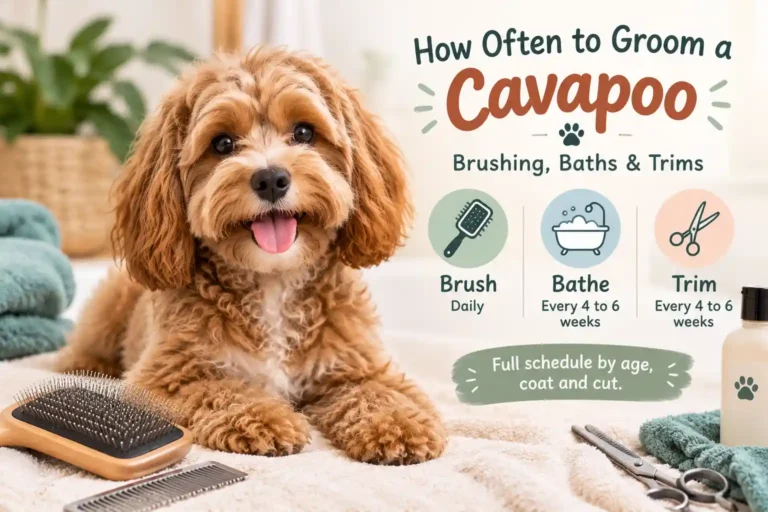
- Tell your groomer: ask them not to pluck routinely, and book a face and ear tidy-up as part of our grooming schedule.
How Vets Diagnose and Treat Cavapoo Ear Infections
A vet will examine the ear canal and often take a sample of discharge to check for bacteria, yeast or parasites, because the right treatment depends on what is there. Treatment of Cavapoo ear infections usually combines cleaning with ear medication, applied after cleaning and drying. Severe cases can need cleaning under sedation or anaesthesia.
- Follow the whole course: stopping early is a common reason infections return.
- Expect rechecks: Merck says dogs with bacterial and yeast infections usually need repeated checkups until no infection shows, often 2 to 4 weeks.
- Treat the cause: allergy control, parasite treatment or hair management may be needed.
- Long-term cases: some dogs need ongoing management, and untreated infections can spread deeper into the ear.
How to Prevent Cavapoo Ear Infections
Preventing Cavapoo ear infections comes down to a few habits:
- Look and sniff at each ear every week, without putting anything inside
- Dry the outer ear after baths and swimming, and ask your vet about a drying cleaner if your dog is prone to infections
- Control allergies and fleas with your vet
- Keep hair at the ear entrance trimmed rather than plucked
- Avoid over-cleaning healthy ears
- Stop other dogs licking your dog’s ears
- Act early: see a vet at the first signs
Our Cavapoo puppy checklist lists the grooming basics, and the Cavapoo breed guide covers general health.
The Cavalier Link: Middle Ear Disease in Cavapoos
Because a Cavapoo has a Cavalier parent, it is worth knowing that Cavalier King Charles Spaniels are known for a middle-ear condition called primary secretory otitis media, according to Today’s Veterinary Practice. It is not the same as a simple outer ear infection, and cases of chronic or recurring ear disease, including repeat Cavapoo ear infections, should include a check of the middle ear. If your Cavapoo has persistent ear problems, ask your vet whether the middle ear has been assessed, and read about other Cavalier-related risks in our Cavapoo vs Cavalier vs Poodle guide.
When to See a Vet About Ear Problems
- Head shaking, scratching, a bad smell, redness, swelling or discharge
- Your dog yelps or pulls away when the ear is touched
- Infections that return after treatment
- Itchy skin, paw licking or ear problems at the same time
- Urgent: a head tilt, loss of balance, circling, loss of hearing or severe pain
This guide is general information, not a diagnosis. Only a vet can see inside the ear and choose treatment.
Cavapoo Ear Infections: The Bottom Line
Cavapoo ear infections are common and painful, and they usually have an underlying cause, most often allergies. Look and sniff regularly, never use cotton swabs, avoid routine ear hair plucking and over-cleaning, and see a vet at the first signs. Recurring infections need the cause treated, not just the ear.
Keep the whole coat and ears in check
See how often to brush, trim and groom a Cavapoo, including the ears and face.
Read the Grooming GuideFrequently Asked Questions About Cavapoo Ear Infections
What are the signs of Cavapoo ear infections?
Common signs are head shaking, scratching, a bad smell, redness, swelling, discharge and scaly skin. The ear can be painful or itchy, and one or both ears can be affected.
Why does my Cavapoo keep getting ear infections?
Allergies are the most common underlying cause, and floppy ears, hair in the canal and moisture make it worse. Recurring Cavapoo ear infections need the underlying cause found and treated.
How do I clean my Cavapoo’s ears?
Only if your vet advises it. Use a vet-approved cleaner, fill the canal, massage the base, let your dog shake, and wipe the visible part with gauze. Never use cotton swabs in the canal.
Should I pluck my Cavapoo’s ear hair?
Not routinely. Veterinary sources say plucking can inflame the canal and make infections more likely. Trim visible hair instead, and ask your vet if hair is blocking the canal.
How often should I clean my Cavapoo’s ears?
Healthy ears often need little cleaning, and over-cleaning can irritate. Check weekly by looking and sniffing, and ask your vet whether cleaning is needed for your dog.
Can I treat a Cavapoo ear infection at home?
No. Yeast, bacteria and mites need different treatment, and a vet should examine the ear first. Cleaning an infected ear can push debris deeper.
Are cotton swabs safe for dog ears?
No. The Merck Veterinary Manual and Texas A&M advise against cotton swabs in the canal because they can push debris deeper and injure the ear.
How long does a Cavapoo ear infection take to clear?
Most Cavapoo ear infections need treatment and follow-up: Merck says dogs with bacterial or yeast infections usually need rechecks until no infection shows, often 2 to 4 weeks, and long-term cases can take months.
Can food cause Cavapoo ear infections?
Cavapoo ear infections are linked to food only if a food allergy is the underlying cause, which a vet must diagnose with a supervised food trial. Switching diets randomly is not a proven fix.
When is an ear infection an emergency?
See a vet urgently for a head tilt, loss of balance, circling, hearing loss, severe pain or a very swollen ear.
Affiliate disclosure: as an Amazon Associate we earn from qualifying purchases at no extra cost to you. We only link products we would recommend to a friend with a Cavapoo.
Sources and Further Reading
- Merck Veterinary Manual, Ear Infections and Otitis Externa in Dogs (pet owner version, reviewed Apr 2026), merckvetmanual.com (signs, causes, cotton swabs, diagnosis and recheck times)
- Texas A&M College of Veterinary Medicine, The Facts of Canine Ear Infections, vetmed.tamu.edu (allergies as the main cause; no cotton swabs)
- Kinship, A Pain in the Ear: What to Know About Dog Ear Infections, kinship.com (causes listed by Dr. Lori Teller)
- Today’s Veterinary Practice, Diagnosing and Treating Chronic and Recurrent Otitis Externa (2025), todaysveterinarypractice.com (primary, secondary, predisposing and perpetuating factors; atopic dermatitis 43 to 75%)
- Today’s Veterinary Practice, Diagnostic Approach to Otitis in Dogs, todaysveterinarypractice.com (primary secretory otitis media in Cavalier King Charles Spaniels)
- IDEXX, Don’t Fear the Yucky Ear (VMX 2025), idexx.com (over-cleaning and irritants as secondary factors)
- dvm360, Stopping the otitis snowball, dvm360.com (routine ear hair plucking is not recommended)
- Merck Animal Health, Otitis externa pet parent handout, dogandcatrepair.com (avoid hair plucking if the hair is not causing a problem)
- Rover, How to Prevent Ear Infections in Dogs, rover.com (damp ears, allergies and canal shape)
- Doodle Doods, Doodle ear care and plucking, doodledoods.com (case-by-case plucking and trimming for doodle breeds)
- Whole Dog Journal, Chronic Ear Infections in Dogs, whole-dog-journal.com (primary, predisposing and perpetuating causes)
- PetMD, Cavapoo Dog Breed Health and Care, petmd.com (Cavapoo health concerns)
This guide is general information and not a substitute for advice from your vet or a qualified trainer. Cost figures are planning estimates and vary by region.

Written by Rachel DoyleFounder of The Cavapoo Guide and owner of Winnie and Ziggy. About Rachel →
This article is part of our Complete Cavapoo Breed Guide →