
Cavapoo Puppy Biting: Why It Happens & How to Stop It

Quick answer: Cavapoo puppy biting is normal and usually peaks during teething at about 3 to 6 months. To stop it, redirect to a chew toy, pause all attention for about 5 seconds whenever teeth touch skin, reward gentle mouthing and make sure your puppy gets enough sleep. Most puppies improve markedly by 6 to 9 months. Never hit or scruff a puppy, and call a vet or trainer if biting comes with stiffness, hard growling or guarding.
If your hands and ankles look like a pincushion, you are not alone. This guide to Cavapoo puppy biting explains why Cavapoo puppies bite, how long it lasts, and exactly how to stop it with a calm, step-by-step plan. It also covers the teething timeline by age, the moments biting spikes, how to tell normal mouthing from a red flag, and what to do if a bite breaks your skin. Every claim is backed by named sources, including the American Kennel Club, the American Veterinary Society of Animal Behavior and peer-reviewed research.
Disclosure: some links in this guide are Amazon affiliate links. If you buy through them we may earn a small commission at no extra cost to you.
Is Cavapoo Puppy Biting Normal?
Yes, Cavapoo puppy biting is a normal stage of development, not aggression. Puppies explore the world with their mouths, play with their teeth, and chew harder while their gums are sore from teething. The goal is not a puppy that never uses its mouth, but a puppy that learns to be gentle, stops when play ends and chews the right things.
Puppies first learn bite control from their littermates. When one puppy bites too hard, the other squeals and stops playing, which teaches the biter that hard mouths end the fun. That lesson is called bite inhibition: a dog’s ability to control how hard it bites. Your job is to continue that teaching at home. A Cavapoo is a small cross between a Cavalier King Charles Spaniel and a Poodle, so the damage is rarely serious, but those baby teeth are needle sharp and the habit is worth shaping early. See our Cavapoo puppy first week guide for the wider settling-in routine.
Why Do Cavapoo Puppies Bite? 7 Common Causes
The reason behind the biting decides the fix, so work out which of these fits your puppy before you pick a strategy.
| Cause | What it looks like | What helps |
|---|---|---|
| Teething | Gnawing on hands, furniture and shoes, especially at 3 to 6 months; sore or drooling gums | Safe chews, frozen stuffed toys, patience |
| Exploring | Mouthing everything new, including your hands and clothes | Plenty of approved things to mouth, supervision |
| Play | Loose, wiggly body, play bows, soft or hard nips during chase and wrestle games | Switch to toys, end the game when teeth touch skin |
| Overtired | Sudden frantic biting in the evening or after a long awake spell | Calm break in a crate or pen, earlier naps |
| Overexcited | Jumping and nipping at greetings, after visitors, during zoomies | Calm greetings, a toy to carry, slower build-up |
| Attention | Bites that stop the moment you respond, then restart | Remove attention for biting, reward calm behaviour |
| Handling or discomfort | Mouthing or snapping when picked up, groomed or restrained | Gentle handling practice, vet check for pain |
Overtiredness is a bigger trigger of Cavapoo puppy biting than most new owners expect. The American Kennel Club lists teething and becoming overtired as two of the primary reasons puppies mouth and nip. Our guide on Cavapoo separation anxiety explains how restful, predictable routines also help a clingy puppy settle.
There may also be a breed factor. Rover quotes Dr. Mindy Waite, a certified applied animal behaviourist who studies mouthing, saying Poodles and Doodle mixes had higher owner reports of mouthing than some other common breeds, although the researchers could not run formal statistical comparisons between breeds. The Poodle side was bred to retrieve from water and spaniels were bred to find and fetch game, so carrying and mouthing things comes naturally to many Cavapoos.
What Does the Research Say About Puppy Mouthing?
Most online advice on Cavapoo puppy biting repeats opinion, so here is what published studies actually found.
- Mouthing is common and age-related. In a US survey of companion dog owners, Waite, Harman and Kodak (2021) found mouthing was common and occurred at higher rates in dogs under 1 year old, and that many dogs continued mouthing into adulthood.
- Owners often respond in unhelpful ways. The same study reported that owners’ reactions to mouthing were often contraindicated for the likely function of the behaviour, meaning the response could accidentally reward it.
- Tug does not cause biting. Dogs that played tug games were no more likely to bite than dogs that did not play tug, so you can keep tug as part of play.
- Matching the fix to the reason works. In a small study of three dogs, Waite and Kodak (2022) found mouthing was mainly driven by social attention. When owners stopped giving attention for mouthing and rewarded calm behaviour instead, mouthing fell to near zero. With only three dogs it is a promising signal, not proof.
- Toys alone are not a cure. A 2025 study of 29 puppies found scented chew toys held interest better, but owners reported no change in how often their puppy chewed or mouthed in a one-week period. Chews help, yet training does the real work.
When Do Cavapoo Puppies Stop Biting? Timeline by Age
Cavapoo puppy biting usually eases from about 6 to 9 months, once their 42 adult teeth are in, but there is no exact age, and consistent training is what shortens the phase. Puppies have 28 baby teeth and adults have 42, according to PetMD and Greencross Vets. Use this timeline to see where your puppy is.
| Age | What is happening | Typical biting | Your focus |
|---|---|---|---|
| 8 to 12 weeks | All 28 sharp baby teeth are in; puppy is new to your home | Constant exploring and play-biting; mouthing often starts before 10 weeks | Redirect, short games, plenty of sleep, start bite control |
| 3 to 4 months | Baby incisors start to loosen; adult incisors and canines arrive at about 3 to 5 months | Chewing and mouthing ramp up | Chew variety, frozen stuffed toys, keep the pause rule |
| 4 to 6 months | Adult premolars and molars come through | Peak chewing and sore gums | Calm chew time, supervision, protect valuables |
| 6 to 7 months | Full set of 42 adult teeth is usually in place | Teething biting eases; adolescent testing can appear | Stay consistent, reward gentle mouths |
| 7 to 12 months | Adult teeth established | Mouthing should be soft and occasional | Hard or worsening biting needs a trainer or vet |
Rover and Dr. Waite stress there is no set timeframe, and mouthing that is accidentally reinforced can persist when a dog is fully grown. If baby teeth are still in place at about 7 months, ask your vet, because persistent baby teeth usually need to be removed. For the grown-up stage, see our Cavapoo temperament guide.

How to Stop a Cavapoo Puppy Biting: The 7-Step Plan
This plan for Cavapoo puppy biting combines the American Kennel Club’s pause-and-redirect method with trainer-recommended techniques. It is force-free: you never hit, scruff or shout. Expect to repeat each step many times a day, because puppies learn through repetition.
- Protect sleep and rhythm first. An overtired puppy bites more. Build in regular naps in a crate or pen, and end play before your puppy is frantic.
- Put approved chews within reach everywhere. Keep two or three safe chews in every room. A frozen, stuffed KONG is a classic for sore gums, and the AKC suggests a frozen stuffed toy or frozen chew for teething puppies.
- Redirect the instant teeth meet skin. Calmly slide a toy into your puppy’s mouth, then praise when they bite the toy. You are teaching what to bite, not just what to avoid.
- Pause all interaction for about 5 seconds. The AKC method is to stop everything: no talking and no eye contact. If nipping resumes, stand up or leave the room for about 5 seconds. If it continues, calmly place your puppy in the crate or pen with a chew for a short break. This is a reset, not a punishment.
- Be a tree for ankle and clothes biting. Drop what you are holding, stand still, let your arms go limp and do not jerk away, because a flapping hand or foot invites more grabbing. Resume when your puppy lets go and settles.
- Reward the soft mouth. When your puppy licks, mouths gently or pulls their punches, keep the game going and add a treat or praise. Gentle equals fun continues; hard equals fun stops.
- Keep every person consistent and add a class. One person allowing rough play while others pause confuses a puppy and stretches the timeline. A well-run puppy class helps everyone practise together.
Should you yelp or say “ouch”?
Some trainers suggest a short, calm “ouch” to mimic a littermate, and it can work. Others note some puppies get more excited by squealing. Test it once: if your puppy pauses, keep it; if your puppy bites harder or jumps up, drop the sound and use silence and stillness instead.
Do bitter sprays work?
Results are mixed. The AKC lists bitter no-chew sprays as an option for furniture and objects, but its own example had a puppy that loved the spray. Ask your vet before using any product on skin, and we do not recommend hot sauce or pepper because it can irritate eyes and noses.

When Do Cavapoo Puppies Bite Most? Common Hot Spots
Cavapoo puppy biting is rarely random. These are the moments owners most often report, with a quick fix for each.
| Moment | Why it happens | Quick fix |
|---|---|---|
| After waking up | Full of energy and keen to play with whatever is closest | Carry them out to toilet, then offer a chew or a toy game |
| Evening ‘zoomies’ | Overtired and overstimulated at the end of the day | Calm chew in the pen, dim the room, earlier nap |
| Greetings at the door | Excitement builds and nipping follows | Greet low-key and toss a toy before they reach you |
| Ankles and trouser legs | Moving feet trigger chase and grab | Be a tree, carry a tug or chew as you walk |
| Being picked up or groomed | Handling can feel restrictive or ticklish | Short, calm handling sessions with treats; see our grooming schedule |
| Sitting on the sofa with you | Hands, hair and cuffs are fun to grab | Keep chews beside you and reward calm lying down |
Play, Toys and Tug: What Prevents Biting?
Good play prevents Cavapoo puppy biting because it gives your Cavapoo something legal to do with their mouth and burns off energy in a controlled way. Choose toys over hands for every game, and keep sessions short so your puppy stays under the excitement threshold.
- Tug is fine: the 2021 Waite study found tug players were no more likely to bite. Teach a clear “drop” and stop the game if teeth touch skin.
- Avoid hand wrestling: using hands as playthings tells your puppy hands are targets.
- Rotate toys: offer a variety so each one feels new, and match texture to what your puppy likes to chew.
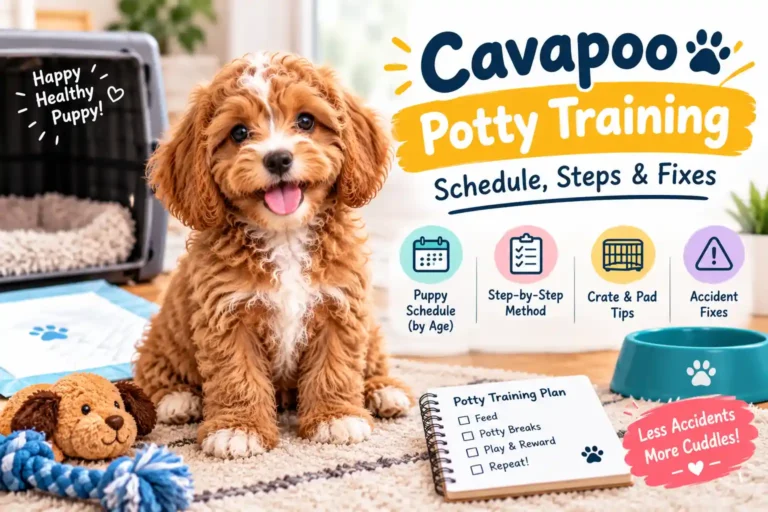
- Add short training: asking for a sit or a down gives your puppy a job and builds self-control. See our Cavapoo potty training guide for how to reward calm routines.
- Use sniffing and food games: scatter treats or use a stuffed toy so the mouth is busy in a calm way.
Mistakes That Make Cavapoo Puppy Biting Worse
- Hitting, flicking the nose or holding the mouth shut: it frightens the puppy and can damage trust.
- Chasing or flapping hands away: jerking away can look like an invitation to play tug or chase.
- Yelling: shouting adds excitement or fear, and neither teaches bite control.
- Letting some people play rough: inconsistent rules slow learning.
- Skipping naps: an overtired puppy cannot control its mouth.
- Only saying no: without an alternative chew, the biting just moves to the next object.
Do not punish a puppy for biting
Professional trainer Ali Smith told Rover that punishment is not needed to train puppies, and that it can teach a dog not to give warning signs such as growling, which can lead to a bite with no warning later. Redirect, pause and reward instead.
When Is Cavapoo Biting Not Normal? Red Flags
Normal Cavapoo puppy biting is loose, wiggly and happens during play or exploring. Biting needs professional help when the body language turns stiff or the context is fear, guarding or pain.
| Normal puppy mouthing | Red flag: get professional help |
|---|---|
| Relaxed, wiggly body and wagging tail | Stiff body, freezing or a hard stare before biting |
| Bites during play or when tired or teething | Growling with a stiff body while biting |
| Eases when you redirect or withdraw attention | Does not respond to redirecting and is getting worse |
| Soft nips that reduce over weeks | Guarding food, toys or the bed with teeth |
| Mouthing at 8 weeks to 6 months | Hard, frequent biting or no improvement after about 6 to 7 months |
Behaviourists use Dr. Ian Dunbar’s six-level bite scale to describe severity: Level 1 is no skin contact, Level 2 is teeth touching skin without puncture, Level 3 is one to four shallow punctures, and higher levels mean deeper wounds. According to Dunbar Academy, the vast majority of dog bites are Level 1 or Level 2. The scale is designed for assessing real bites, not for judging a play-biting puppy, but it shows why a trainer will ask where your puppy’s bites fall.
Worried about temperament and guarding?
Read what a typical Cavapoo personality looks like at each age so you know what is normal for the breed.
Read the Temperament GuideCould Pain or Illness Be Behind the Biting?
Yes, sometimes. If your Cavapoo bites or snaps when touched in one spot, or Cavapoo puppy biting starts suddenly in a previously gentle dog, book a vet check before assuming it is a training problem. Common culprits include ear or skin problems and dental issues such as retained baby teeth.
Cavalier King Charles Spaniel lines can also carry inherited conditions such as syringomyelia, which can cause pain around the head and neck, so a breeder who tests parents matters. See our health tests to ask a Cavapoo breeder guide. Always mention any yelping, scratching at the shoulder or sensitivity around the head to your vet.
Cavapoo Puppy Biting and Children
Cavapoo puppy biting needs extra care around children because mouthing hurts and fast movements trigger more chasing and nipping. Supervise every interaction, teach children to stand still like a tree, and never let a child chase or tease a puppy.
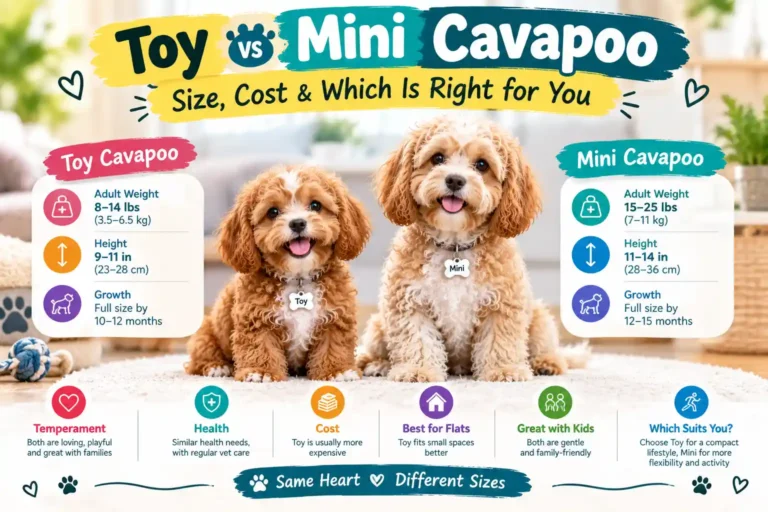
Give children a toy to hold during play, keep faces away from puppy mouths and end sessions before anyone is overexcited. Our Cavapoo and kids guide covers age-by-age rules, and toy vs mini Cavapoo helps you think about size around small children.
Puppy Classes, Socialisation and Vaccines
A good puppy class helps with Cavapoo puppy biting, and the American Veterinary Society of Animal Behavior says puppies can start socialisation classes as early as 7 to 8 weeks. The AVSAB recommends at least one set of vaccines at least 7 days before the first class, a first deworming, and staying up to date throughout.
The AVSAB notes the first three months of life are the primary window for socialisation, and that behaviour problems, not infectious disease, are a leading cause of death in dogs under 3. Always follow your own vet’s advice on timing, and choose a class that uses rewards rather than harsh corrections. Our Cavapoo puppy checklist lists what to ask and bring.
What to Do If a Puppy Bite Breaks Your Skin
If Cavapoo puppy biting breaks the skin, clean the wound immediately by running warm tap water over it for a couple of minutes, even if the skin does not look broken, according to NHS-based guidance published by NI Direct. The same guidance says to seek medical advice for any animal bite that breaks the skin and not to delay until signs of infection appear.
- Wash the area with running water and mild soap for several minutes
- Remove anything stuck in the wound, such as hair or dirt
- Cover with a clean dressing
- Call your doctor, or NHS 111 in the UK, the same day if the skin is broken
- Get urgent care for deep wounds, heavy bleeding, bites to the face or hands, or spreading redness and swelling
This is general information, not medical advice. Check your tetanus status with your doctor, and tell your vet if bites are becoming harder or more frequent.
Cavapoo Puppy Biting: The Bottom Line
Cavapoo puppy biting is normal, driven mostly by teething, play and tiredness, and it improves for most dogs by 6 to 9 months. Redirect to chews, pause all attention for about 5 seconds when teeth touch skin, reward gentle mouths, protect sleep and keep everyone consistent. Skip punishment, and get help early if biting is hard, guarded or getting worse.
Bringing a puppy home soon?
Cavapoo puppy biting is only one part of the first weeks. See the routine, supplies and settling-in plan.
Read the Puppy First Week GuideFrequently Asked Questions About Cavapoo Puppy Biting
Is Cavapoo puppy biting normal, even when it is a lot?
Yes. Cavapoo puppy biting and mouthing are normal for puppies and peak during teething at about 3 to 6 months. It is not a sign of aggression unless it comes with stiffness, hard growling or guarding.
How do I stop my Cavapoo puppy biting me?
To stop Cavapoo puppy biting, redirect to a chew toy, pause all interaction for about 5 seconds when teeth touch skin, repeat calmly, and reward gentle mouthing. Protect your puppy’s sleep and keep everyone using the same rules.
At what age do Cavapoo puppies stop biting?
Cavapoo puppy biting improves for most dogs between 6 and 9 months, once the full set of 42 adult teeth is in at about 6 to 7 months. There is no exact age, and unaddressed biting can continue into adulthood.
Why is my Cavapoo puppy biting more at night?
Evening biting is often tiredness and overstimulation. Give a calm chew in a pen or crate, dim the lights and bring naps earlier so your puppy is not overtired by the evening.
Does yelping or saying ouch work?
It works for some puppies and makes others more excited. Try it once and, if your puppy bites harder, stay silent and still instead.
Should I use a crate for biting?
A crate or pen can give a calm reset, as the AKC describes, when used quietly with a chew and never as a punishment. Keep breaks short.
Is my Cavapoo puppy biting because of teething?
Teething drives Cavapoo puppy biting between about 3 and 6 months, when your puppy is chewing everything and may drool or have sore gums. Safe chews and frozen stuffed toys can help, and persistent baby teeth at about 7 months should be checked by a vet.
Is tug of war bad for puppies who bite?
No. A US study found dogs that played tug were no more likely to bite than dogs that did not. Teach a clear drop cue and stop the game if teeth touch skin.
When should I call a trainer about Cavapoo biting?
Call a qualified, force-free trainer or a vet if biting comes with stiffening, freezing, hard growling, guarding food or toys, bites during handling, or if it is not improving by about 6 to 7 months.
What if my Cavapoo puppy bit me and broke the skin?
Wash the wound under running water straight away, cover it and contact a doctor the same day, as NHS-based guidance advises seeking advice for any animal bite that breaks the skin.
Affiliate disclosure: as an Amazon Associate we earn from qualifying purchases at no extra cost to you. We only link products we would recommend to a friend with a Cavapoo.
Sources and Further Reading
- American Kennel Club, akc.org (How to stop a teething puppy from biting: causes, 5-second pause method, crate time-out)
- AVSAB, Position Statement on Puppy Socialization, indoorpet.osu.edu (puppy classes from 7 to 8 weeks, vaccine timing)
- AVMA JAVMA News, Behavior society supports early puppy socialization, avma.org (behaviour problems versus infectious disease in young dogs)
- Waite, Harman and Kodak (2021), Learning and Motivation, doi.org (frequency and demographics of mouthing in US companion dogs)
- Waite and Kodak (2022), Behavior Analysis in Practice, link.springer.com (owner-implemented functional analysis and treatment of mouthing)
- Frontiers in Behavioral Neuroscience (2025), doi.org (scented chew toys and puppy chewing and mouthing)
- Rover, When Do Puppies Stop Biting?, rover.com (expert comments from Dr. Mindy Waite and trainer Ali Smith)
- PetMD, Puppy Teething, petmd.com (baby and adult teeth and eruption ages)
- Vetstreet, Puppy Teething 101, vetstreet.com (teething timeline by tooth type)
- Hundeo, Puppy tooth change, hundeo.com (persistent baby teeth after about 7 months)
- Dunbar Academy, The Bite Scale, dogstardaily.com (bite scale levels and how common each is)
- NI Direct, Animal and human bites, nidirect.gov.uk (first aid and when to seek medical advice (NHS-adapted))
- PawTracks, When Do Puppies Stop Biting?, pawtracks.com (some puppies become more excited by yelping)
This guide is general information and not a substitute for advice from your vet, a qualified trainer or a doctor. Puppies and situations vary.

Written by Rachel DoyleFounder of The Cavapoo Guide and owner of Winnie and Ziggy. About Rachel →
This article is part of our Complete Cavapoo Breed Guide →
One Comment